Download

1 / 7
90 likes | 204 Vues
Dinoflagellates are a diverse group of unicellular organisms that use a pair of flagella for movement, spinning as they swim. Most are photosynthetic and have a protective cellulose cell wall resembling armor. Their life cycle includes motile haploid stages and population growth primarily through asexual reproduction. Notable species include Pfiesteria, known for causing harmful algal blooms, and zooxanthellae, which support coral health. Dinoflagellates play a crucial role in aquatic ecosystems by producing oxygen and can have significant impacts on both marine life and human health.

E N D
By Alex Yoo Dinoflagellates
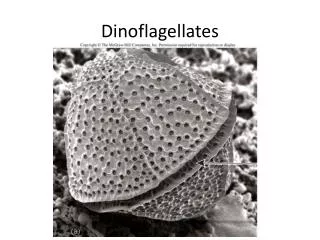
Key Features • Use a pair of flagella in order to move. They spin as they swim. The flagella are on grooves. • Most are photosynthetic and unicellular but some live in colonies. They have a cellulose cell wall that looks like armor. • During cell division, the nuclear envelope stays intact and the microtubules pass through the nucleus to keep it the nucleus oriented the right way. Then it does binary fission-like division
Life Cycle • Motile haploid stages • Population growth usually through asexual reproduction • In the diagram, brown = motile, whitish color = sessile
Some Interesting Facts • Pfiesteria, a species of dinoflagellates, causes red tides, algal blooms that cause fish to die and harm humans • Some species make their own light through bioluminescence • The first dinoflagellate discovered was called Pyrrhophyta or “fire algae” because of its bioluminescence
More Interesting Facts • Zooxanthellae help build coral reefs by providing nutrients to its symbiont coral • Besides diatoms, dinoflagellates are the largest group of eukaryotic algae
Significance to Humans • Red tides harm not only fish, but also humans • Half of all the dinoflagellates are photosynthetic and provide oxygen
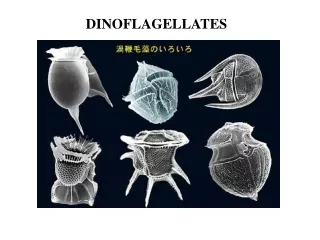
Examples of Dinoflagellates • Ordered from left to right: • Pfiesteria • Ceratium tripos • Zooxanthellae • Togula britannica