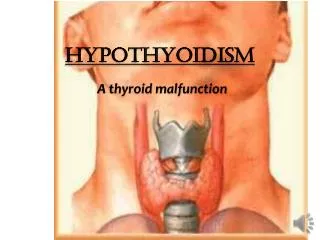
Hypothyoidism
100 likes | 230 Vues
Hypothyroidism is a condition where the thyroid malfunctions, leading to insufficient hormone production that affects metabolism and brain chemistry. It may impact about 5% of the U.S. population, particularly women. Common symptoms include fatigue, weight gain, constipation, dry skin, hair loss, and depression. Causes can range from environmental toxins to genetic factors. Regular testing is crucial for early detection, especially for women over 35. With appropriate treatment, many symptoms can be managed effectively, allowing individuals to return to their normal activities.


Hypothyoidism
E N D
Presentation Transcript
Hypothyoidism A thyroid malfunction
Thyroid Function:to produce thyroid hormone, a chemical that effects metabolism, and also is part of the brain chemistry mix that regulates moods, emotions, cognitions, appetite and behavior.
WHO might be affected • About 5 % of the U.S. population has hypothyroidism. • Women. • The American Thyroid Association recommends that adults, particularly women, have a blood test to detect thyroid problems every 5 years starting at age 35.
symptoms • Fatigue • Unexplained weight gain • Constipation • Dry skin and hair • Hair loss, including loss of eyebrow hair • Puffiness or swelling in the face • Muscle pain and weakness • Joins pain and weakness • Heavy menstrual periods • Brittle hair and nails • Depression • Cold Intolerance
Hypothyroidism can be caused by • Environmental toxins • Generic thyroid failure • Thyroid surgery • Treatment of previous over-activity • Major surgery • Tonsillectomy • Major trauma • Glandular fever • Severe deficiency of iodine, or too much intake
Mental Effects of hypothyroidism • Depression • Mental Sluggishness • Increased sleepiness • Forgetfulness • Emotional Instability • Decreased ability to pay attention and focus • Irritability • Fear of open or public spaces(agoraphobia)
Thyroid Testing • TSH(thyroid-stimulating imbalance) • Free T4 and Free T3 • Antibodies test • Nuclear scans/Radioactive Iodine Uptake • Thyroid Ultrasound
Iodine Intake • Fish and Shellfish • Cow and Goat Milk • Breast Milk • Iodized table salt
Living with hypothyroidism. • Once you get your thyroid level under control, many of your symptoms tend to disappear, and you will be able to go back to your regular activities.
References: • Shomon, Mary J. Living Well With Hypothyroidism (book) • Mayo Clinic. Org www.mayoclinic.org • The National Endocrine and Metabolic diseases Information service. • ww.endocrine.niddk.nih.gov