Download
1 / 8
80 likes | 183 Vues
Explore the cultural richness of The Chou Dynasty (1026 B.C.–256 B.C.) with advancements in economics, political theories, and profound philosophy. Witness the rise of skilled craftspeople and merchants, the introduction of currency for trade, and the flourishing of arts and writing. Delve into the teachings of Confucius and the principles of Taoism, and understand the contrasting views of Lao-tzu and Confucius on governance. Uncover the turbulent Era of Warring States and the transition to the Ch’in Dynasty in 256 B.C., shaping the future of ancient Chinese civilization.

E N D
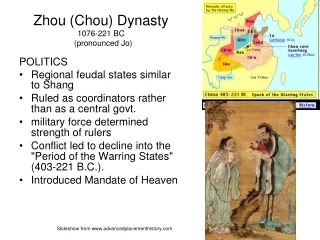
The Chou Dynasty 1026 B.C – 256 B.C.
Economic Advances • Skilled craftspeople and merchants increased • Money in the form of small coins was used • People could buy goods without bartering • Trade expanded and the dynasty became prosperous
Political Theories • They believed their king was “The Son of Heaven” • Revolution- The people believed they had the right to overthrow the king if he did not rule justly
Arts and Philosophy • Chinese characters and writing that is still used today developed • Philosopher- People who seek wisdom and truth and think about the principles that should guide a person’s life
Confucius • Lived from 551 BC – 479 BC • Most important figure in Chinese history • Taught about self-control and proper conduct • Respect for elders, teachers, and parents • “Do not do to others what you do not want them to do to you”
Taoism • A religion developed by Lao-tzu • To learn the true meaning of life, one must live simply and in harmony with nature. • Be humble and kind, even when others insult you • If you follow these steps, you will achieve inner peace (or Tao)
Lao-Tzu vs. Confucius • Confucius stressed the importance of government • Lao-tzu thought less government was better
Era of Warring States • The last 200 years of the Chou dynasty was known as “The Era of Warring States” • In 256 B.C., the Ch’in Dynasty took power