The U.S. Prepares for World War I: Challenges, Strategies, and Key Events
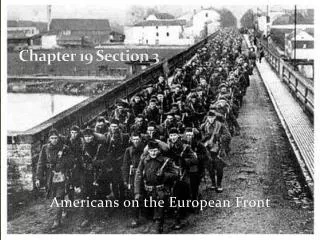
In April 1917, the United States was unprepared for war on the European front. President Wilson dispatched General John J. Pershing and troops to Europe while implementing the Selective Service Act to draft young men. The American Expeditionary Force, colloquially known as "doughboys," was formed, and naval convoys were introduced to protect ships from German U-boats. Meanwhile, significant developments unfolded in Europe, including the rise of Lenin and the Bolsheviks in Russia, German advancements, and the introduction of tanks in battle. The chapter concludes with turmoil and the signing of an armistice.

The U.S. Prepares for World War I: Challenges, Strategies, and Key Events
E N D
Presentation Transcript
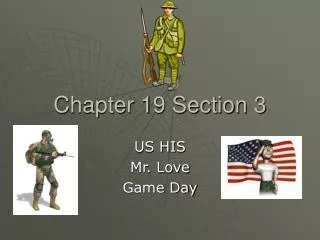
Chapter 19 Section 3 April 1917- US was not ready for war on the European front
Chapter 19 Section 3 continued • President Wilson sends John J. Pershing and men to Europe • Selective Service Act- draft of young men • “War to end all wars” • American Expeditionary Force- volunteers and National Guardsmen- called “doughboys” • Convoy- group of unarmed ships guarded by destroyers- purpose- destroy submarines • African Americans- 369th Infantry Regiment- Harlem Hell Fighters
Chapter 19 Section 3 continued • November 1917- Vladimir Lenin- followers- Bolsheviks- overthrew Russia’s republican government • March 21, 1918- German forces advance deep into Allied territory • New weapon- tank- Allies began breaking German lines • German zeppelins- floating airships- come into play
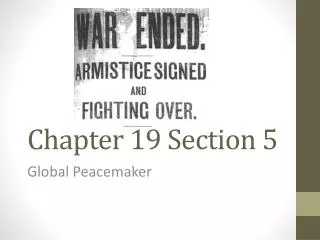
Chapter 19 Section 3 continued • Ending the war • Bulgaria and Turkey- separate peace with the Allies • Austria-Hungary splintered • Armistice- cease-fire signed • Influenza epidemic • Genocide- organized killing of an entire people- Armenians