The Philosophical Foundations of the U.S. Constitution: Democracy vs. Republic
This lesson explores the profound influence that philosophers had on the formation of the United States and its Constitution. It distinguishes between a Republic and a Democracy, highlighting the founders' preference for a Republic. The lesson also addresses the consequences of disobeying constitutional laws, the historical context of slavery, and the geographic variations among the colonies. By drawing on ideas from Greek and Roman texts and thinkers like Locke and Hobbes, the founders established a framework designed to serve the people and limit government power.

The Philosophical Foundations of the U.S. Constitution: Democracy vs. Republic
E N D
Presentation Transcript
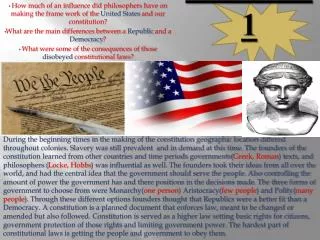
Lesson 1 How much of an influence did philosophers have on making the frame work of the United States and our constitution? What are the main differences between a Republic and a Democracy? What were some of the consequences of those disobeyed constitutional laws? During the beginning times in the making of the constitution geographic location differed throughout colonies. Slavery was still prevalent and in demand at this time. The founders of the constitution learned from other countries and time periods governments(Greek, Roman) texts, and philosophers (Locke, Hobbs) was influential as well. The founders took their ideas from all over the world, and had the central idea that the government should serve the people. Also controlling the amount of power the government has and there positions in the decisions made. The three forms of government to choose from were Monarchy(one person) Aristocracy(few people) and Polity(many people). Through these different options founders thought that Republics were a better fit than a Democracy. A constitution is a planned document that enforces law, meant to be changed or amended but also followed. Constitution is served as a higher law setting basic rights for citizens, government protection of those rights and limiting government power. The hardest part of constitutional laws is getting the people and government to obey them.