Gender and Identity in Early Modern Europe: The Debate through Gabrielle Suchon's Treatise
This exploration delves into Gabrielle Suchon's 1693 Treatise on Ethics and Politics, situated within the broader context of gender and identity debates in Early Modern Europe. We will examine the roles of classical philosophers like Aristotle, discuss themes such as the responsibility for women's plight, and analyze both logical and theological feminism. As you engage with the text, consider historically significant passages, the positions on gender presented, and how they compare to contemporary issues. This course invites critical questions that bridge historical and modern discussions on women and gender.

Gender and Identity in Early Modern Europe: The Debate through Gabrielle Suchon's Treatise
E N D
Presentation Transcript
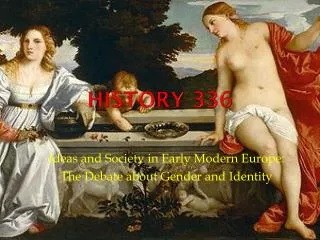
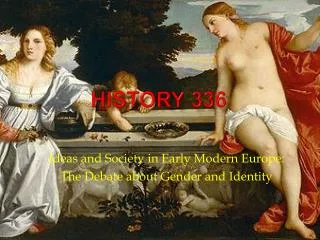
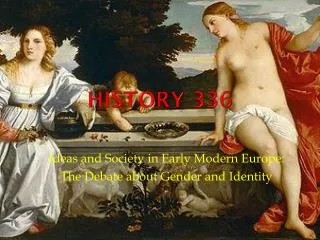
History 336 Ideas and Society in Early Modern Europe: The Debate about Gender and Identity
Gabrielle Suchon: Treatise on Ethics and Politics (1693) • Themes • Sources: Aristotle et al. • Who is responsible for women’s plight? • Philosophy and practice (p. 152) • Gender and difference (p. 157) • Logical and theological feminism • Continuities / discontinuities with other contributions to the debate about women and gender.
Questions to consider for the rest of the course • What passages strike you as historically significant? Mark them and write them down. • What positions on women and gender does a given primary source take on women and gender? How does the author support these positions? • Can you formulate at least one historical question based on the assigned reading to start a larger discussion? • Can you find a few secondary sources (and other primary sources) by using the library catalogue and databases that will help you answer your historical question? • Can you think of any current news stories that relate to women and gender?









![Oracle 1Z0-336 Dumps - Actual 1Z0-336 Questions PDF [Updated]](https://cdn4.slideserve.com/8069836/oracle-dt.jpg)