Download
1 / 8
80 likes | 238 Vues
This lesson explores the vital processes of photosynthesis and cellular respiration. You will learn to define both processes and understand their locations within cells. Photosynthesis occurs in the chloroplasts of plant leaves, converting sunlight, carbon dioxide, and water into glucose and oxygen. Conversely, cellular respiration takes place in mitochondria of both plant and animal cells, breaking down glucose with oxygen to produce carbon dioxide, water, and ATP—energy crucial for cellular functions. Master these concepts for a deeper appreciation of life sciences.

E N D
By Mrs. Kristin Shaw Photosynthesis & Cellular Respiration
Learning Objectives: At the end of this lesson you should be able to: • Define Photosynthesis and Cellular Respiration • Explain where each process happens inside cells • Explain why each process is necessary for cells to live
Photoynthesis is . . • a process where plants use energy from sunlight to make their own food (glucose).
Where does Photosynthesis happen? • The chloroplasts located in the cells of leaves are responsible for performing photosynthesis.
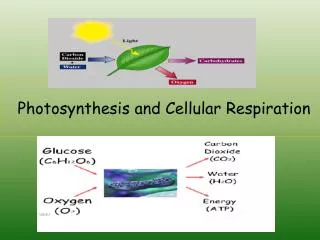
How does Photosynthesis work? The Chemical equation in words: Carbon Dioxide + Water + light energy Glucose + Oxygen Reactants = what goes in Products = what comes out
What is Cellular Respiration? • a process that breaks down glucose in order to make energy for an organism
Where does Cellular Respiration happen? • Cellular respiration happens in the Mitochondria of both plant and animal cells.
How does Cellular Respirationwork? • The Chemical equation in words: Oxygen Glucose Glucose + Oxygen Carbon Dioxide + Water + ATP Reactants = what goes in Products = what comes out Carbon Dioxide Water ATP – energy that our cells use to perform their necessary functions