Bloodborne Pathogens
340 likes | 357 Vues
Learn about the risks of exposure to bloodborne pathogens, understand OSHA regulations, and discover how to prevent exposure and take action in the event of an exposure.


Bloodborne Pathogens
E N D
Presentation Transcript
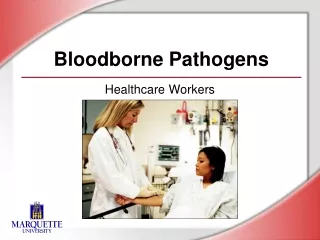
Bloodborne Pathogens Healthcare Workers
Session Objectives You will be able to: • Identify risks of exposure • Understand the requirements of the facility’s exposure control plan and OSHA regulations • Prevent exposure by taking proper precautions • Take effective action in the event of an exposure
What is a BB Pathogen? Microorganisms present in Blood, Other Potentially Infectious Materials or
BloodbornePathogens(BBPs) “OPIM “ is: • Semen • Vaginal secretions • Body fluids such as pleural, cerebrospinal, pericardial, peritoneal, synovial, and amniotic • Saliva in dental procedures • Any body fluids visibly contaminated with blood
What Can I Do? • As a student of a health related program, you are at risk of exposure to bloodborne pathogens. • Presence of mind is your most important protection against contamination. • Know your program policy (see student handbook) and follow it without exception. • Follow the information you learn today.
Understanding the Risks Risk of infection depends on several factors: • The pathogen involved • The type/route of exposure • The amount of virus in the infected blood at the time of exposure • The amount of infected blood involved in the exposure • Whether post-exposure treatment was taken • Specific immune response of the individual
Common BB Pathogen Diseases Human Immunodeficiency Virus (HIV) Hepatitis B(HBV) Hepatitis C(HCV)
HIV • HIV is the virus that can lead to AIDS • HIV attacks the immune system • HIV does not survive well outside the body • Symptoms include fever, loss of appetite, weight loss, chronic fatigue, and skin rashes or lesions • Victims can develop cancer or deadly infections in later stages • No cure; no vaccine available yet
HIV HIV Transmission: • Sexual contact • Sharing needles and or syringes • From HIV-infected women to their babies during pregnancy or delivery • Breast-feeding • Needle sticks
Hepatitis B • Hepatitis B can cause serious health problems • 100 times more contagious than HIV • Hearty – can live for 7+ days in dried blood • Symptoms include fatigue, loss of appetite, nausea, pain, vomiting, and jaundice • Estimated that 257 million people are living with hepatitis B • No cure, but there is a preventative vaccine
Hepatitis C • The most common chronic bloodborne infection in the U.S. • In health care most cases are the result of needle sticks • It can be years before symptoms are recognized • Hepatitis C can cause chronic liver disease and death • Symptoms are similar to hepatitis B • There is no vaccine, can be cured with treatment.
Workplace Transmission • Contact with an infected person’s blood or bodily fluids that contain blood • Contact with other potentially infectious materials • Contact with contaminated sharps/needles
Workplace Transmission (cont.) • Entry through non-intact skin • Entry through eyes, nose, and mouth How bloodborne pathogens are NOT transmitted • Coughing • Sneezing • Touching • Using same equipment • Toilet • Showers • Water fountains
Health Care Workers and BBPs Occupational Transmission • Risk of infection following a needle stick or cut from a positive (infected) source: • HBV: 6%-30% • HCV: 1.8%(range 0%-7%) • HIV: 0.3%
OSHA Requirements Bloodborne Pathogens Standard Employer Requirements: • Written exposure control plan • Exposure determination • Hazard identification and protective measures • Training for employees at risk • PPE • Hepatitis B Vaccine • Post exposure evaluation & follow-up • Recordkeeping Exposure Control Plan
Exposure Controls Reducing your risk • Standard Precautions • Safer Equipment and Medical Devices • Work practices • Personal protective equipment • Housekeeping • Laundry handling • Hazard communication- labeling • Regulated Waste
Standard Precautions • Treat all blood and bodily fluids as if they are infected • Treat potentially contaminated materials as if they are infected • The goal is to avoid all direct contact • Standard precautions apply to any and all potential exposures • No contact, no exposure. No exposure, no infection.
Precautions with Sharps • Prevent needle sticks with needleless equipment or special devices • Look for sharps less likely to cause needle sticks
Precautions with Sharps (cont.) • Dispose of all sharps in proper containers • Don’t shear, break, bend, or remove needles • Don’t recap needles unless you use a mechanical device • Don’t reach into a container that might contain sharps • Use a strainer to hold sharps when cleaning • Don’t clean up broken glass with your hands
Safe Work Practices • Take special care when you collect, handle, store, or transport blood or other potentially infectious materials • Transport waste, sharps, or other potentially contaminated items in closed, leak proof containers • Do not open, empty, or clean reusable containers by hand
Personal Hygiene • Wash with soap and water immediately after any exposure • Wash thoroughly after removing PPE • Flush eyes, nose, or mouth after exposure • Don’t eat, drink, smoke, apply cosmetics, or handle contact lenses in any possible exposure areas • Don’t keep food or drinks near potentially infectious materials
Personal Protective Equipment • Gloves • Face and eye protection • Safety glasses with sides shields • Splash goggles • Face shield • Mask • Protective clothing • Lab coat • Gown • Apron • Surgical cap or hood • Shoe cover or boot • Fully encapsulated suit • Inspecting PPE before use • Removing PPE after use
Labels and Signs Labels that include the universal biohazard symbol and the word “Biohazard” must be attached to: • Containers of regulated biowaste • Refrigerators or freezers containing blood or other potentially infectious materials • Containers used to store, transport, or ship these materials
Housekeeping DISINFECTANT • Use standard precautions when cleaning • Wear appropriate PPE • Clean and decontaminate all equipment and surfaces (recommend 1:10 bleach solution) • Remove and replace protective coverings • Clean and decontaminate reusable bins, pails, and cans • Dispose of contaminated cleaning materials properly
Laundry • Use standard precautions • Wear assigned PPE • Bag contaminated laundry • Use leak-proof bags for wet laundry
Regulated Medical Wastes • Liquid or semiliquid blood or other potentially infectious materials • Contaminated items that would release infectious materials when compressed • Contaminated sharps • Pathological or microbiological waste
Exposure Incidents • An exposure incident is direct contact with blood, bodily fluids contaminated with blood, or other potentially infectious material • Wash thoroughly after any direct exposure • Report any exposure incident right away • You will be offered a blood test and medical evaluation
Hepatitis B Vaccinations • Safe and effective way to prevent disease • Offered to all potentially exposed employees • You can decline to have the vaccination
Key Points to Remember • Take standard precautions • Wear assigned PPE • Use safe work practices • Practice good personal hygiene • Dispose of contaminated materials properly in labeled containers • Report all direct exposures
In Conclusion BB pathogen rules are in place for your health and safety. Failure to follow them is a risk that should not need be taken.
Questions ? Do I really have to do BBP training every year? YES!
IF YOU HAVE ADDITONAL QUESTIONS, YOU MAY: • Talk with you instructor • Check out some of the great information that can be found on the web • Refer to the student handbook for your clinical program
DVD The Bloodborne Pathogens Standard How It Affects You, How It Protects You