Understanding the Verb "To Be": Questions and Answers
210 likes | 327 Vues
This resource explores the verb "to be" in English, focusing on its use in affirmative, negative, and interrogative sentences. It includes examples with personal pronouns (I, you, he, she, it, we, they) to ask and answer various questions, such as names, ages, and states of being. Learn how to construct questions like "What's your name?" and respond appropriately, as well as how to understand responses to questions about others. Ideal for language learners seeking confidence in everyday conversations.


Understanding the Verb "To Be": Questions and Answers
E N D
Presentation Transcript
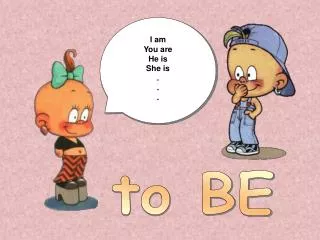
to be Affirmative Negative Interrogative
PersonalPronouns I You He She It We You They
To be Question: What’s your name? My name is… I am…
To be Question: What’s hisname? His name is… Question: What’s her name? Her name is…
To be Question: Are you Kate? Yes, I am. No, I’m not. = No, I am not. I am…
To be Question: Isshe Mary? Yes, she is. No, she isn’t. (= No, she is not.) She is…
To be Question: Is he Toby? Yes, he is. No, he isn’t. (= No, he is not.) He is…
To be Question: Who are you? I am…
To be Question: Who isshe? She is…
To be Question: Who is he? He is…
To be Question: How old are you? I am…
To be Question: Are you fourteen? Yes, I am. No, I am not. I am…
To be Question: How old is she? She is eleven.
To be Question: Is she eighteen? Yes, she is. No, she isn’t. She is…
To be Question: How old is he? He is ten.
To be Question: Is he twenty? Yes, he is. No, he isn’t. He is…
To be Question: How old are they? They are twelve.
To be Question: Are they thirteen? Yes, they are. No, they aren’t. They are…
To be Question: Are we happy? Yes, we are. No, we aren’t. = No, we are not.
To be Question: Are they students? Yes, theyare. No, they aren’t. = No, they are not.