Metallic Bonding
Metallic bonding is a unique phenomenon where metal ions lose their valence electrons, forming cations and creating a "sea of electrons." This free movement of electrons allows metals to exhibit properties such as strength, malleability, ductility, electrical and thermal conductivity, and luster. The malleability of metals enables layers of atoms to slide over one another, while electrons can move between ions. Common alloys include Alnico, Brass, Bronze, Cast Iron, Steel, and Stainless Steel, each with distinct applications based on their properties.

Metallic Bonding
E N D
Presentation Transcript
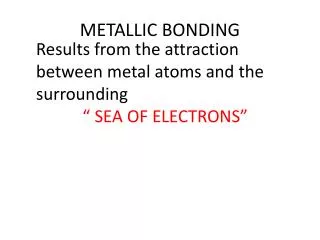
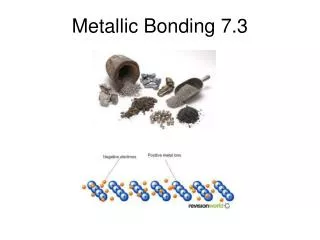
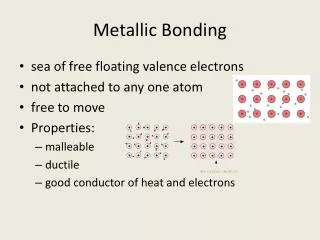
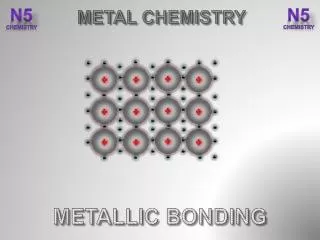
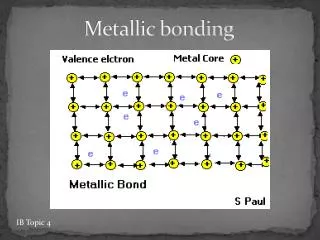
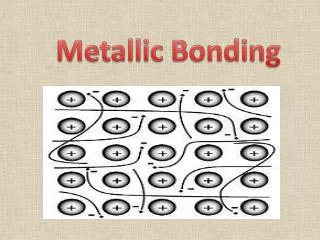
Metal Ions and Electrons Metals lose their valence electrons and become cations “Loose” valence electrons form a “sea of electrons” Loose electrons are “free to move”
Metals and Electrons Metal bonds
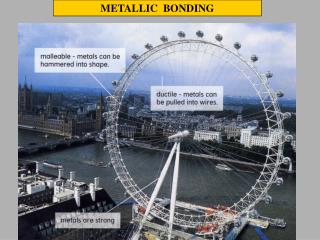
Metallic Bond Properties Strength Malleability Ductility Electrical Conductivity Thermal conductivity Luster
Malleability easily bent, pressed or hammered layers of atoms slide over each other the electrons can run in between ions when layers are bent
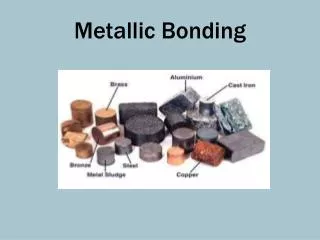
Types of Alloys • Alnico (AlNiCo) • Brass (CuZn) • Bronze (CuSnAl) • Cast iron (CFe) • Steel (CFe) • Stainless Steel (CFeNiCr)