The Dropship
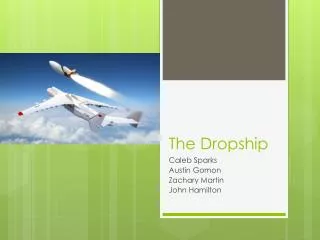
In this project, we designed three distinct balsa wood airplanes to evaluate their performance concerning speed, mobility, and stability in flight. Our research focused on the four key factors affecting airplane performance: weight, lift, drag, and thrust. We hypothesized that each design would yield different flight patterns, with at least one model successfully gliding. Our tests involved launching the airplane designs from 400 feet, and the results supported our hypothesis, showing variations in gliding capabilities among the models.

The Dropship
E N D
Presentation Transcript
The Dropship Caleb Sparks Austin Gomon Zachary Martin John Hamilton
Purpose • Our purpose is to design three different airplanes made out of Balsa Wood, to see which one as the best speed, mobility, and stability during flight. We came up with 3 ideas about the airplane designs and see which one fails, succeeds, or perform better then the current designs for today’s airplanes
Background • We researched and found four things that could affect the airplane. • Weight • Lift • Drag • Thrust
Hypotheses and Tests • We expect that the different airplane designs will have different flight patterns and hope that at least one will glide. • We will test the flight patterns by launching the airplane designs 400 ft. in the air. • We will accept our hypotheses if the airplanes glide differently. • We will reject our hypotheses if all the airplanes glide roughly the same.
Analysis, Conclusion and Questions? • The data of the airplanes means that one of the airplanes glided, and the other two did not glide, but fell at different velocity. • We are comfortable accepting our hypotheses. • Questions???