The Impact of Genetically Modified Plants on Agriculture and Nutrition
100 likes | 235 Vues
This overview explores genetically modified (GM) plants, which have alterations in their hereditary material through biotechnologies to enhance resistance to pests, diseases, and environmental factors, and improve nutritional content. By 2006, 252 million acres of transgenic crops were cultivated globally, providing benefits such as herbicide and insect resistance. Notable examples include Roundup Ready crops and nutrient-enriched rice. While GM plants offer solutions for food security and malnutrition, they also raise debates surrounding safety, ethics, and environmental impact.


The Impact of Genetically Modified Plants on Agriculture and Nutrition
E N D
Presentation Transcript
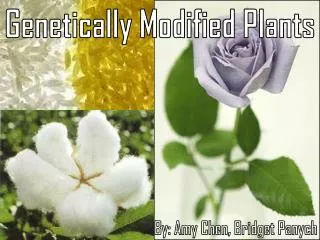
Genetically Modified Plants By: Amy Chen, Bridget Panych
Genetically Modified Plants Summary • Makes changes to the hereditary material of a living organism • Biotechnologies are used to develop plants resistant to pests, diseases, drought, heat, or cold, and improve the nutritional content of plant food
In 2006, a total of 252 million acres of transgenic crops were planted in 22 countries by 10.3 million farmers • Herbicide- and insect-resistant soybeans, corn, and cotton • Sweet potato resistant to a virus that could decimate most of the African harvest • Rice with increased iron and vitamins that may alleviate chronic malnutrition in Asian countries • Variety of plants able to survive weather extremes
Examples of GM Plants • Roundup, made by Monsanto (agriculture company)- a herbicide that kills any plant that it touches • Created “Roundup Ready” crops • Crop ignores Roundup, but weeds are killed • Roundup Ready seeds reduce production costs and increase yield, so food becomes less expensive • Scientists have inserted genes that produce a natural insecticide into corn plants
Genetically Modified Flower • Blue Roses • A Japanese company, Suntory • Delphinidin (produces blue pigment) • Growing the rose experimentally in Australia and the United States to get approval for sales
Technology • Restriction enzymes • Ligase enzymes • Gene vector • Donor gene
Benefits • Crops • Preventing malnutrition/disease • Eliminating Pesticides • Environment • "Friendly" herbicides and insecticides • Conservation of soil, water, and energy • Better natural waste management • Society • Increased food security for growing populations
Risks and Controversies • Safety • Human health impact: allergens, transfer of antibiotic resistance markers, unknown effects • Ethics • Violation of nature’s organisms • Tampering with nature by mixing genes among species • Objections to consuming animal genes in plants
Sources • http://www.ornl.gov/sci/techresources/Human_Genome/elsi/gmfood.shtml • http://www.greenfacts.org/en/gmo/2-genetically-modified-crops/1-agricultural-biotechnology.htm#0 • http://recipes.howstuffworks.com/question148.htm • http://www.trendhunter.com/trends/blue-rose-is-here • Whitman, Deborah. Genetically Modified Foods: Harmful or Helpful. April 2000. http://www.csa.com/discoveryguides/gmfood/overview.php