Harnessing Solar Energy: How Solar Panels Convert Sunlight into Electricity
90 likes | 230 Vues
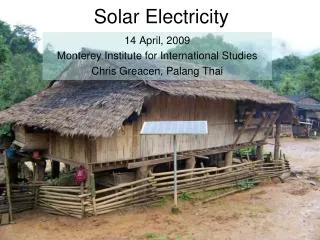
Solar panels, primarily made of silicon, are vital for converting sunlight into electricity. Silicon, abundant on Earth, must be heated to high temperatures and formed into thin wafers for effective energy conversion. When sunlight strikes these wafers, it excites electrons, generating a flow of electric current. This current travels through wires to power homes and appliances. Solar energy can also be utilized in various ways, such as powering solar cars, cooking with solar ovens, heating homes, supporting photosynthesis, and producing electricity.


Harnessing Solar Energy: How Solar Panels Convert Sunlight into Electricity
E N D
Presentation Transcript
Solar electric panels are made up of something called silicon, the same thing that makes up sand. There is more silicon on the planet than almost anything else.
The silicon has to be heated to super high temperatures in a big factory, and then formed into very thin wafers.
When sunlight hits a solar panel, it makes electrons in the silicon move around. (Electrons are teeny tiny specks—they’re way too small for us to see, even under a microscope.)
As the electrons get moved and bumped around they get converted from a negative to a positive flow of electric current. This current travels through wires and into your home.
3. grid 4. appliances 1. solar panels 2. inverter
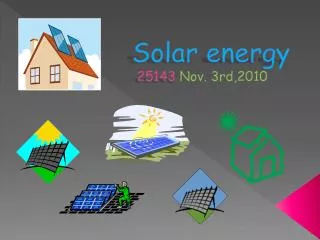
The sun can be used in many ways. • To run a car – solar cars • To cook – solar oven • To heat a house – radiation • To feed a plant – photosynthesis • To produce electricity – solar panels