Download
1 / 5
0 likes | 4 Vues
Efficient water management is essential for healthy landscapes and crops. The guide focuses on irrigation installation and maintenance, offering step-by-step instructions for system setup, sensor placement, and automated scheduling. It also highlights routine checks, troubleshooting common problems, and ensuring long-term durability. By combining smart technology with practical practices, the content helps users conserve water, reduce costs, and save time. Suitable for homeowners, landscapers, and farmers, it demonstrates how modern irrigation can simplify daily maintenance. Learn more about o

E N D
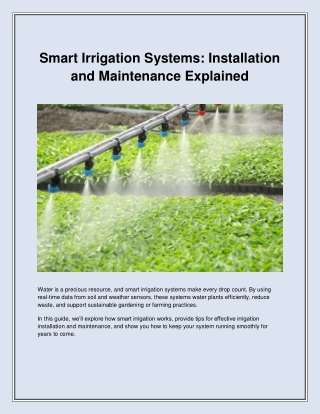
Smart Irrigation Systems: Installation and Maintenance Explained Water is a precious resource, and smart irrigation systems make every drop count. By using real-time data from soil and weather sensors, these systems water plants efficiently, reduce waste, and support sustainable gardening or farming practices. In this guide, we’ll explore how smart irrigation works, provide tips for effective irrigation installation and maintenance, and show you how to keep your system running smoothly for years to come.
What Is a Smart Irrigation System? A smart irrigation system is an automated watering system that monitors soil moisture, weather conditions, and plant needs to deliver water precisely when it’s required. Unlike conventional irrigation systems that rely on manual timers, smart systems adjust automatically based on actual conditions. Typical components include: ●Soil moisture sensors– Detect how much water the soil actually holds. ●Weather sensors or forecast integration– Prevent unnecessary watering by accounting for rainfall or extreme temperatures. ●Smart controllers and timers– Regulate water delivery automatically. ●Mobile apps– Allow remote monitoring and control from anywhere. By integrating these elements, smart irrigation ensures plants receive the right amount of water, minimizes waste, and promotes healthy growth. How Smart Irrigation Works Smart irrigation systems use technology to water plants efficiently, only when they truly need it. Sensors in the soil monitor moisture levels, while weather sensors and online forecasts track rain, temperature, and humidity. The system’s smart controller collects all this data and calculates exactly how much water each part of your garden or farm requires. This ensures that every plant gets the right amount of water—no more, no less. What makes smart irrigation truly powerful is its ability to adapt automatically. The system can adjust watering schedules in real time, respond to unexpected rain, and even alert you to potential problems. Many systems can be controlled remotely via apps, giving you complete control and peace of mind. By delivering water precisely where and when it’s needed, smart irrigation helps plants thrive while conserving water and reducing costs.
Why Use Smart Irrigation? The benefits of switching to a smart irrigation system extend far beyond convenience. ●Water Conservation: Smart irrigation can reduce water usage by 30–50% by eliminating unnecessary watering. This is especially important in areas facing drought or water restrictions. ●Cost Savings: Less water usage translates to lower utility bills. For farms or large landscapes, the savings can be substantial. ●Plant Health: Overwatering can lead to root rot, disease, and weak plant growth. Smart systems prevent this by delivering the optimal amount of water. ●Time Efficiency: No more adjusting timers, turning valves on and off, or manually checking soil moisture. ●Environmental Responsibility: Using water more efficiently reduces environmental strain and supports sustainable practices. Ultimately, a smart irrigation system is not just a luxury—it’s a smart investment in efficiency, sustainability, and long-term plant health, made possible through careful irrigation installation and maintenance. Things to Check Before Installation Before installing a smart irrigation system, planning is crucial. Here’s what to consider: 1. Water Source– Make sure your water supply has enough pressure and flow. 2. Soil Type– Sandy soils drain quickly, clay soils hold water longer. 3. Plant Types– Different plants need different amounts of water. 4. Existing Infrastructure– Check if your current pipes or sprinklers can work with smart controllers. 5. Internet Connectivity– Wi-Fi systems need a strong signal in all areas. 6. Budget– System costs vary depending on size and features. Considering these factors ahead of time ensures smooth installation and long-term efficiency.
How to Install a Smart Irrigation System Installing a smart irrigation system is usually straightforward but may vary depending on your setup. Here’s a simple guide: 1. Plan your zones– Separate areas by plant type or water needs. 2. Install pipes and sprinklers– Make sure they cover each zone evenly. 3. Place sensors– Put soil moisture sensors in representative areas of your garden. 4. Connect the controller– Hook it up to the water supply and sensors. 5. Set schedules in the app– Program zones according to plant and soil needs. 6. Test the system– Run it to check coverage and fix leaks or clogs. Common installation problems include uneven watering, low water pressure, or sensor errors. Check connections, placement, and settings if these occur. Common Installation Problems Even smart systems can face challenges if not installed correctly: ●Uneven Watering: Caused by incorrect sprinkler placement, blocked nozzles, or poor zone planning. ●Low Water Pressure: Insufficient pressure prevents sprinklers from reaching all areas. ●Sensor Errors: Misaligned or malfunctioning sensors can result in overwatering or underwatering. ●Leaks and Clogs: Loose fittings, damaged pipes, or clogged nozzles reduce efficiency. ●Wi-Fi Issues: Weak signals may prevent remote control or automatic updates. Careful planning, proper sensor placement, and thorough system checks help avoid these issues.
How to Take Care of a Smart Irrigation System Regular maintenance keeps your system running efficiently. Here are some tips: ●Clean filters and nozzles monthly– Prevents clogs and ensures proper water flow. ●Check water pressure– Ensures sprinklers cover the area correctly. ●Monitor water usage– Unusual spikes may indicate leaks or sensor issues. ●Professional inspections– Annual check-ups keep complex systems in top condition. Consistency in irrigation installation and maintenance ensures continued water savings, cost reduction, and plant health. Conclusion Smart irrigation systems are a smart investment for anyone looking to save water, reduce costs, and maintain healthy plants. With proper planning, installation, and maintenance, these systems provide a hassle-free way to optimize watering and support sustainable practices. Whether you are a homeowner, landscaper, or farmer, adopting smart irrigation is a step toward efficient, eco-friendly water management. Contact Us Want to save water, reduce costs, and keep your plants healthy? We’re here to help every step of the way. ●Phone: +1 407-530-5468 ●Email: connor@irridevelopmentgroup.com ●Website: www.irridevelopmentgroup.com Let’s make watering smarter, easier, and more efficient together!