
Job Sectors in 19th Century British North America: A Review
This chapter focuses on identifying job opportunities within various job sectors during the mid-1800s in British North America. We categorize jobs such as farming, fishing, logging, manufacturing, and shipbuilding into primary, secondary, and tertiary sectors. Additionally, we discuss daily life in this era, examining aspects such as transportation methods and the availability of doctors in urban versus rural areas, while determining the truthfulness of specific statements about life during this period. This review also encourages personal reflection on migration choices.

Job Sectors in 19th Century British North America: A Review
E N D
Presentation Transcript
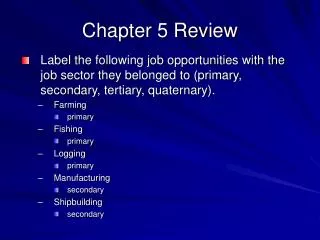
Chapter 5 Review • Label the following job opportunities with the job sector they belonged to (primary, secondary, tertiary, quaternary). • Farming • primary • Fishing • primary • Logging • primary • Manufacturing • secondary • Shipbuilding • secondary
Chapter 5 Review • If you were moving to British North America in the mid-1800s to find a job, which colony would you move to? Why? • Give your own opinion • Explain
Chapter 5 Review • Label the following statements about daily life in British North America in the mid-1800s as true statements or false statements.
Chapter 5 Review • Methods of transportation were basic roads, by foot, horse, or oxen. • TRUE
In urban areas, doctors were available. In rural areas, doctors were rarely available. • TRUE
Pastimes that were popular were sporting events, reading, and family activities. • TRUE
At that time, everyone attended school regularly. There were no longer one room schoolhouses. • FALSE
Medical knowledge at that time was very advanced. Doctors then knew everything that doctors today know. • FALSE