Navigating Economic Policy: Challenges and Changes in the U.S. Budget System
50 likes | 169 Vues
This analysis explores the complexities of U.S. economic policy-making, highlighting the fragmented system involving the Troika and key figures like the Chairman of the Council of Economic Advisors and the Secretary of the Treasury. It discusses the interplay between mandatory spending, appropriations, and conflicting political incentives that influence budget decisions. Key legislation such as the Congressional Budget Act of 1974, Gramm-Rudman, and the Budget Enforcement Act are examined. The paper also delves into tax reform debates, addressing issues of fairness and predictability in the U.S. tax system.


Navigating Economic Policy: Challenges and Changes in the U.S. Budget System
E N D
Presentation Transcript
Making Economic Policy Wilson 18B
Fragmented System • Troika • Chairman of Council of Economic Advisors • Director of the Office of Management and Budget • Secretary of the Treasury • Federal Reserve Board • Congress • Committees • Budget, • Appropriations • Finance • CBO Usually majoritarian politics Some interest group politics NAFTA/CAFTA Client group politics lead to mistrust – energy Entrepreneurial?
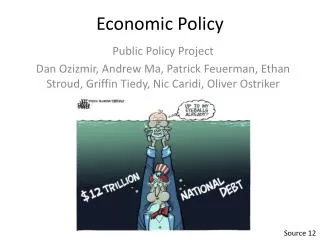
Budget • Conflicting incentives • Cut spending overall • Cut deficit • Support constituents favorite programs • Not a 0 sum proposal • Decide what will spend money on first • Congressional Budget Act of 1974 – budget resolutions • Mandatory spending • Entitlements like SS, Medicare Appropriations Authorizations
Spending • Procedures v. Policies • Budget Ceiling • Gramm-Rudman • Balance Budget Act – 1985 • Sequester (summer 2012) • Hit 3/1/13 • Budget Enforcement Act – 1990 • Spending caps • Pay-as-you-go
Bush Tax Cut 6/7/01 Packaged with Stimulus 12/17/10 Passed first 2-year extension 1/1/11 Packaged with debt-ceiling deal 8/2/11 Extended with highest-rate increase 1/2/13 Taxes • Good tax? • Fairness • Burden • Predictable • US rates low • Loopholes • Client politics • Debates of tax reform • Income Tax • 16th Amendment – 1913 • Graduated • Tax Reform Act of 1986 • Flip “20th Century deal” • High rates with large loopholes close