Download
1 / 4
0 likes | 1 Vues
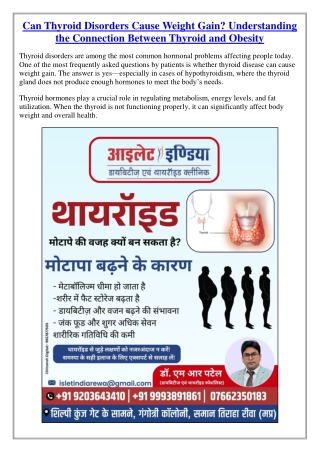
Thyroid disorders are among the most common hormonal problems affecting people today. One of the most frequently asked questions by patients is whether thyroid disease can cause weight gain. The answer is yesu2014especially in cases of hypothyroidism, where the thyroid gland does not produce enough hormones to meet the bodyu2019s needs.

E N D
Can Thyroid Disorders Cause Weight Gain? Understanding the Connection Between Thyroid and Obesity Thyroid disorders are among the most common hormonal problems affecting people today. One of the most frequently asked questions by patients is whether thyroid disease can cause weight gain. The answer is yes—especially in cases of hypothyroidism, where the thyroid gland does not produce enough hormones to meet the body’s needs. Thyroid hormones play a crucial role in regulating metabolism, energy levels, and fat utilization. When the thyroid is not functioning properly, it can significantly affect body weight and overall health.
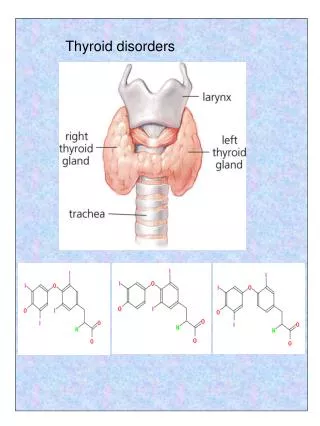
What Is the Thyroid Gland? The thyroid is a small, butterfly-shaped gland located in the front of the neck. It produces important hormones—T3 (triiodothyronine) and T4 (thyroxine)—that control how fast or slow the body’s metabolism works. A healthy thyroid helps maintain: Normal body weight Energy levels Heart rate Body temperature Fat and carbohydrate metabolism Any imbalance in thyroid hormone levels can disturb these processes. How Can Thyroid Disorders Lead to Weight Gain? Weight gain is most commonly associated with hypothyroidism, a condition in which the thyroid gland becomes underactive. 1. Slowed Metabolism When thyroid hormone levels are low, the body’s metabolic rate slows down. This means fewer calories are burned at rest, leading to gradual and persistent weight gain even without increased food intake. 2. Increased Fat Storage A slow metabolism causes the body to store more fat instead of using it for energy. This results in increased body fat, particularly around the abdomen. 3. Reduced Energy Levels People with thyroid problems often feel tired, weak, and less motivated to exercise. Reduced physical activity further contributes to weight gain. 4. Increased Risk of Diabetes and Obesity Thyroid dysfunction can disturb blood sugar control and insulin sensitivity, increasing the risk of diabetes and obesity when left untreated. 5. Unhealthy Dietary Habits Excessive consumption of junk food, sugary items, and processed foods—combined with thyroid imbalance—can worsen weight gain and metabolic issues.
Other Symptoms of Thyroid-Related Weight Gain In addition to weight gain, thyroid disorders may cause: Fatigue and low stamina Cold intolerance Hair fall and dry skin Constipation Depression or mood changes Menstrual irregularities in women Ignoring these symptoms can lead to long-term health complications. Importance of Early Diagnosis Many people struggle with weight gain for years without realizing that thyroid dysfunction may be the underlying cause. Early diagnosis allows timely treatment and better control of symptoms. Common Tests for Thyroid Evaluation: TSH (Thyroid Stimulating Hormone) T3 and T4 levels Thyroid antibody tests (if required) Regular monitoring is essential for proper management. Can Weight Be Controlled With Thyroid Treatment? Yes. With correct diagnosis, appropriate medication, lifestyle modification, and regular follow-up, weight gain caused by thyroid disorders can be effectively controlled. Effective Management Includes: Thyroid hormone replacement therapy (when required) Balanced, calorie-controlled diet Regular physical activity Avoiding excessive sugar and junk food Managing stress and sleep Weight loss may be gradual, but consistent treatment leads to long-term improvement. Role of Lifestyle Changes in Thyroid-Related Obesity Medical treatment works best when supported by healthy lifestyle habits: Eat nutrient-rich, home-cooked meals Maintain a regular exercise routine Avoid crash diets
Get adequate sleep Follow up regularly with a thyroid specialist A personalized treatment plan delivers the best results. When Should You Consult a Specialist? You should consult a thyroid specialist if: You are gaining weight despite diet and exercise You feel persistently tired or sluggish You have a family history of thyroid disease You are unable to lose weight despite efforts Timely consultation can prevent complications and improve quality of life. Conclusion Thyroid disorders, particularly hypothyroidism, can be a significant cause of unexplained weight gain and obesity. Understanding the link between thyroid health and metabolism is the first step toward effective treatment. With expert guidance, accurate diagnosis, and proper management, thyroid-related weight gain can be controlled successfully. Ignoring symptoms may worsen the condition, while early treatment ensures better health outcomes. Contact Details Islet India – Diabetes & Thyroid Clinic Dr. M. R. Patel Diabetes and Thyroid Specialist Phone Numbers: +91 92036 43410 +91 99938 91861 +91 7662 350183 Email: isletindiarewa@gmail.com Visit & Follow Us: Google map Facebook Instagram Clinic Address: In front of Shilpi Kunj Gate, Gangotri Colony, Saman Tiraha, Rewa, Madhya Pradesh For expert diagnosis and treatment of thyroid disorders, obesity, and diabetes, consult a specialist at Islet India – Diabetes & Thyroid Clinic.