Understanding Volcanic Eruptions: Mechanisms, Types, and Stages
This section explores volcanic eruptions, detailing how magma rises from the chamber to the surface through pipes and vents. Key components include magma chambers, pipes, vents, lava flows, and craters. It distinguishes between quiet eruptions, characterized by low-silica magma that flows easily, and explosive eruptions, where high-silica magma causes gas buildup and violent explosions. The text also categorizes volcanic activity into active, dormant, and extinct stages, emphasizing the potential for eruptions based on surface and temperature changes.

Understanding Volcanic Eruptions: Mechanisms, Types, and Stages
E N D
Presentation Transcript
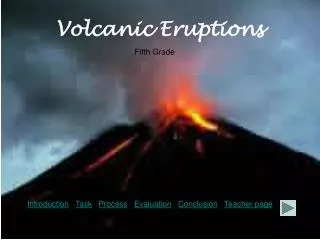
A. Magma Reaches Earth’s Surface • Magma chamber- magma collects in a pocket • Pipe- the magma moves through which connects to the magma chamber • Vent- an opening in which magma and gas escape • Lava flow- the area that is covered with lava as it pours out of a vent • Crater- a bowl-shaped area that may form at the top of a volcano
6. Pressure is released and the carbon dioxide expands 7. The force of the expanding gases pushes magma from the magma chamber through the pipe until it flows or explodes out of the vent
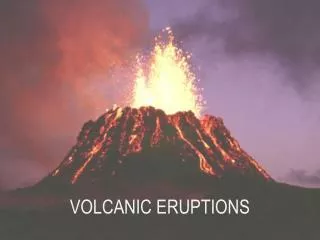
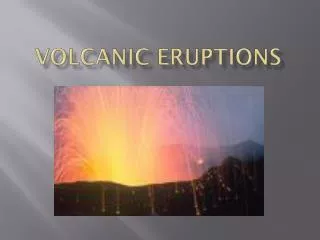
B. Kinds of Volcanic Eruptions • Quiet- magma low in silica, flows easily, lava oozes quietly • Explosive-magma high in silica, builds up in volcanic pipe, gases cannot escape • Pyroclastic flow- an explosive eruption hurls out a mixture of hot gases, ash, cinders, and bombs • Sets fire • Deadly gases
C. Stages of Volcanic Activity • Active, dormant or extinct • Dormant-can erupt • Extinct- unlikely to erupt again • Can detect surface changes and temperature changes