Enhancing Interoperability in Health Data Exchange: Levels and Types
30 likes | 155 Vues
This document explores the various maturity levels and types of interoperability in health data exchange, focusing on technical and semantic processes. It highlights the importance of reliable and secure shared messaging, varied by organizational needs and connectivity challenges. Emphasis is placed on selected data models like HL7 V3 RIM and the role of dynamic shared data and collaborative services. A framework for understanding interoperability by urgency and the impact of standardized vocabularies, ontologies, and inference engines on data exchange is also presented.


Enhancing Interoperability in Health Data Exchange: Levels and Types
E N D
Presentation Transcript
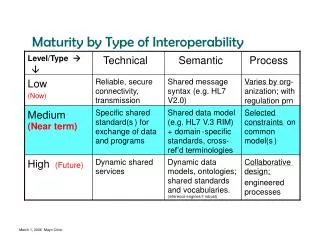
Maturity by Type of Interoperability Level/Type à Technical Semantic Process à Reliable, secure Shared message Varies by org- Low connectivity, syntax (e.g. HL7 anization; with regulation prn (Now) transmission V2.0) Specific shared Shared data model Selected Medium standard(s ) for (e.g. HL7 V.3 RIM) constraints on (Near term) exchange of data + domain - specific common and programs standards, cross- model(s ) ref’d terminologies Dynamic shared Dynamic data Collaborative High (Future) services models, ontologies; design; shared standards engineered and vocabularies. processes (inference engines if robust)
Types of Interoperability by Level of Urgency Technical Semantic Process