The Roaring 20s and the Great Depression: Causes, Effects, and Consumerism
This exploration of the interwar years focuses on the Roaring 20s, a time characterized by economic booms, increased consumerism, technological advancements, and the rise of advertising. With a surge in wages and credit, Americans embraced material goods like automobiles and radios. However, the aftermath of Black Tuesday in 1929 led to the Great Depression, marked by severe economic downturns, high unemployment rates, and a significant drop in GDP. This study examines the intricate causes and effects of both the roaring decade and the subsequent depression.

The Roaring 20s and the Great Depression: Causes, Effects, and Consumerism
E N D
Presentation Transcript
Interwar Years Social Studies 11 Ms. Thind
Roaring 20s and Consumerism • Consumerism: social and economic system causing desire to purchase material goods in great amounts. • Economic boom wages spending • Rise of credit
Roaring 20s and Consumerism • Rise in advertising • New technology: telephone, automobiles, toaster, washing machines • New inventions: radio, Band-Aids, hair dryer
What were the causes, effects, and responses to the Great Depression?
The Great Depression • Black Tuesday – October 29, 1929. • Severe economic depression caused by: - consumer demand - financial panic - misguided government policies
The Stock Market Crash • October 29, 1929 Black Tuesday • Panic selling as many had bought on margin
Causes of the Great Depression • Overproduction and expansion • Dependence on primary products • Dependence on the US • High Tariffs – Protectionism • Psychological Uncertainty
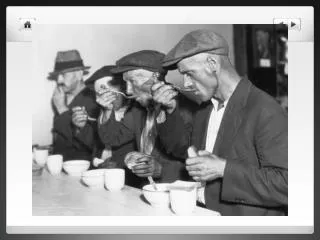
Effects of the Great Depression • Demand for raw materials decreases. • Companies cut back on production layoffs. • GDP drops 40% • Unemployment reaches 30%