Download
1 / 7
70 likes | 177 Vues
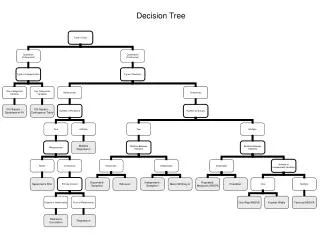
This guide outlines the methodology for evaluating soil horizons using bulk density measurements and assessing the presence of free water, coarse fragments, and horizon thickness. It includes steps for classifying horizons as Oi, Oe, Oa, or mineral surfaces, as well as subsurface horizons. Detailed estimations are provided for bulk density across different depth layers (0-5 cm and 5-bottom cm). It is essential to determine the compliance of cavities, assess thickness criteria, and prepare for sampling by combining with adjacent horizons.

E N D
Is this an Oi or Oe horizon? • Does it have free water present? • Estimate Db • Ring
Is this an Oa or a mineral surface horizon? • Is it >= 5 cm thick? • Does it have >10% coarse fragments? • Does it have free water present? • Estimate Db in 0-5 cm layer • Compliant cavity on 0-5 cm • Scoop, 0-5 cm
Is this an Oa or a mineral surface horizon? • Is the total horizon thickness >10 cm • Does it have >10% coarse fragments? • Does it have free water present? • Estimate Db in 5-bottom cm of horizon • Compliant cavity in 5-bottom cm of horizon • Core in 5-bottom cm of horizon
Is this an Oa or a mineral surface horizon? • Is the total horizon thickness >7 cm • Does it have >10% coarse fragments? • Does it have free water present? • Estimate Db in 5-bottom cm of horizon • Compliant cavity in 5-bottom cm of horizon • Scoop in 5-bottom cm of horizon
Is this a subsurface horizon? • Is the horizon >= 5 cm thick? • Does it have >10% coarse fragments? • Does it have free water present? • Estimate Db • Compliant cavity • Core
Is this a subsurface horizon? • Is the horizon >= 3 cm thick? • Does it have >10% coarse fragments? • Does it have free water present? • Estimate Db • Compliant cavity • Scoop • Combine with an appropriate adjoining horizon for sampling