Download
1 / 2
20 likes | 138 Vues
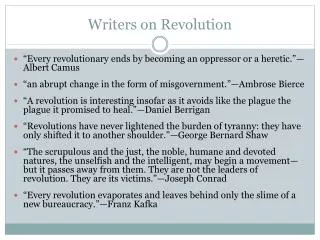
Explore the paradox of revolutions through the thoughts of prominent writers and philosophers. From Albert Camus' assertion that every revolutionary risks becoming an oppressor to George Bernard Shaw's view on the continuity of tyranny, this discussion sheds light on the complexities and ironies inherent in revolutionary movements. Delve into the nature of leadership, the fate of noble intentions, and the transformation of bureaucracies in the aftermath of societal upheaval as articulated by intellectuals like Joseph Conrad and Franz Kafka.

E N D
Writers on Revolution “Every revolutionary ends by becoming an oppressor or a heretic.”—Albert Camus “an abrupt change in the form of misgovernment.”—Ambrose Bierce “A revolution is interesting insofar as it avoids like the plague the plague it promised to heal.”—Daniel Berrigan “Revolutions have never lightened the burden of tyranny: they have only shifted it to another shoulder.”—George Bernard Shaw “The scrupulous and the just, the noble, humane and devoted natures, the unselfish and the intelligent, may begin a movement—but it passes away from them. They are not the leaders of revolution. They are its victims.”—Joseph Conrad “Every revolution evaporates and leaves behind only the slime of a new bureaucracy.”—Franz Kafka