Understanding Ebola Virus Treatment and Prevention Strategies
30 likes | 171 Vues
Currently, there is no specific treatment for the Ebola virus, necessitating strict safety measures for healthcare providers. Doctors must utilize personal protective equipment including gloves, masks, and suits while treating patients. Supportive care, such as intravenous fluids, is critical for managing dehydration in affected individuals. Disposal of medical tools is handled with extreme caution to prevent contamination. The primary prevention strategy involves avoiding exposure to the virus and undertaking blood tests upon returning from areas with Ebola outbreaks.


Understanding Ebola Virus Treatment and Prevention Strategies
E N D
Presentation Transcript
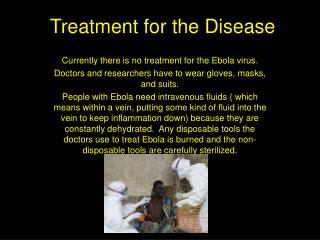
Treatment for the Disease Currently there is no treatment for the Ebola virus. Doctors and researchers have to wear gloves, masks, and suits. People with Ebola need intravenous fluids ( which means within a vein, putting some kind of fluid into the vein to keep inflammation down) because they are constantly dehydrated. Any disposable tools the doctors use to treat Ebola is burned and the non-disposable tools are carefully sterilized.
Prevention • The only prevention known right now is to stay away from it and take precautions if you plan to go to Africa and make sure you get your blood tested when you get back just to make sure.
Bibliography • http://www.teenoutreach.com/Online_Help/health/ebola/treatment.htm\ • http://en.wikipedia.org/wiki/Ebola • http://www.nature.com/ni/journal/v8/n11/images/ni1519-F1.jpg • http://3.bp.blogspot.com/_V1LsrDr1oNE/R1jCFegndKI/AAAAAAAAB6s/WpN2Z_Pis5I/s400/EBOLA.jpg • http://www.ehow.com/how_2066539_treat-ebola.html • http://www.izea.net/images/africa.gif