
Present Simple Negative
E N D
Presentation Transcript
PresentSimpleNegative Přítomný čas prostý Záporné věty
Negative (zápor) • They stay at home in the evening. They don´t stay at home in the evening. • Lisa reads a magazine after school. Lisa doesn´t read a magazine after school.
Make negatives • She works in the evening. • She doesn´t work in the evening. • We go to school by bus. • We don´t go to school by bus. • Tom gets up at 7. • Tom doesn´t get up at 7.
Compare (porovnej) to have got to have I have a brother. I don´t have a brother. Do you have a pen? No, I don´t. She has a blue bicycle. She doesn´t have a blue bike. • I´ve got a brother. • I haven´t got a brother. • Have you got a pen? • No, I haven´t. • She´s got a small red car. • She hasn´t got a small red car.
Make negatives and remember • Raquel has three children. • Raquel doesn´t have three children. • Mr and Mrs Hill have got a big garden. • Mr and Mrs Hill haven´t got a big garden.
Make sentences about Tom´s family • Tom´s mum / get up / at 6 Tom´s mum gets up at 6. • Tom / not play/ the piano Tom doesn´tplay the piano. • Angela / have lunch/ at school Angela has lunchat school. • Dad / work / at a bank Dad works at a bank.
Make sentences about Tom´s family • Mum / not go to work / by bus Mum doesn´t go to work by bus. • Mum and Dad / not speak English Mum and Dad don´t speak English. • They / live / in France They livein France • Tom / go out with friends / in the evening Tom goes out with friends in the evening.
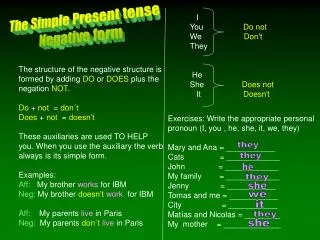
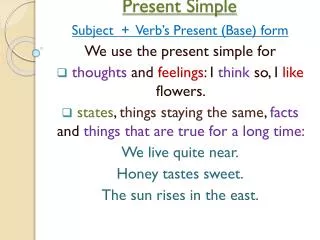
Remember (pamatuj) Všechny osoby 3. osoba jednotného čísla sloveso + -s • sloveso v zákl. tvaru don´t doesn´t