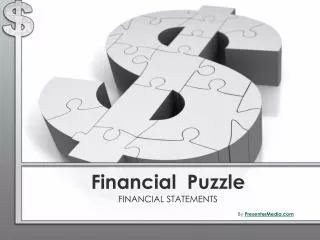
Financial Puzzle
This overview explores the core concepts presented by Dave Ramsey on financial management and saving. With 70% of consumers living paycheck to paycheck, Ramsey emphasizes the importance of establishing an emergency fund as a financial safety net. We discuss key aspects such as the significance of saving money, the principles of the “Baby Step” program, and how emotional factors influence financial decisions. Additionally, we cover various savings accounts, investment options, and effective strategies for building wealth over time, ensuring you’re prepared for life’s unexpected emergencies.

Financial Puzzle
E N D
Presentation Transcript
Financial Puzzle Saving
Dave? • What do we think of him? • What do we think of the book setup? • Notice stats on the side – 70% of consumers live paycheck to paycheck
Watch Dave Ramsey Fill in notes • Baby Step 1: $1,000 • Put $500 • Saving must become a priority • US has a negative savings rate • Saving money is about emotion and contentment • Money is amoral
Why save? • Emergency Fund • Purchases • Wealth Building
Emergencies are going to happen • What emergencies have happened that you need money for, now? • Sub pump went out • Tooth needs work • Car needs work • Murphy’s Law • 3-6 for you • Many say 8 months to 2 years • Money Market • Deposit account, relatively high rate of interest, requires a higher minimum balance to earn interest or avoid monthly fees
More Fill in the blank • Investment • Touch • First • Pay yourself first! • When you get a paycheck put a set amount or % to the side for ‘savings’ • First get the emergency fund set up, then save for other things • Purchases
Even more fill in the blank • Borrowing • Sinking Fund • Pool of money set aside to repay bond or make improvements (i.e. school uses sinking fund money to fill in gaps – signs around the building) • Wealth Building • Discipline Marathon • Authorized Checking • Allow bank to write you a check – • Most of you will have direct deposit = direct deposit into savings instead of checking • Compound Interest • Now • Interest
Where you can keep your $ at the bank • Safety Deposit Box • A fireproof metal strongbox (usually in a bank) for storing valuables • Saving Accounts • A bank account that earns interest • Checking Accounts • An account where the holder can write checks • Pay less interest than savings accounts, or none at all
Other accounts at the bank • Certificate of Deposit • Time deposit, which is insured, with a specific, fixed term, and, usually, a fixed interest rate • At Chase - $1,000 minimum deposit • CD Term – APY: 6 Month = .2% 12 Month = .25% 18 Month = .35% 24 Month = .40% 36 Month = .5% • Money Market • Deposit account, relatively high rate of interest, requires a higher minimum balance to earn interest or avoid monthly fees
Secure places from the US Treasury • Treasury Bills • Short-term securities (few days to 1 year) • Sold at a discount from face value • Treasury Notes • Interest every 6 months, Maturities in 2, 3, 5, 7, & 10 years • Treasury Bonds • Interest every 6 months, Mature in 30 years • I Savings Bonds & EE/E Savings Bonds • Earn interest protected / based on interest & market
Precious Metals & Stones • Silver: 32.02 (March 20, 2012) • $31.63 per ounce (12/8/11) • 1 year +2.88 or 9.68% • Gold: $1,648.34 (March 20, 2012) • $1,711.20 per ounce (12/8/11) • 1 year +336.50 or 23.89%
Shop for a bank • Alone or with partner, look up information about banks • Be sure to look at adult/college student accounts • Net Worth & answer the questions • Note: If do not want to show my your Net Worth - Do NOT write down the information • You DO have to answer the questions
Picture Page Layout Here is a place holder for the text. The coins on this page can be removed. You may delete this text.