
Supply and Demand
E N D
Presentation Transcript
What, why and for whom? • Three Problems All Economic Systems Must Address • What should be produced? • How should it be produced? • For whom will it be produced? • Lots of ways to do this • Feudalism, guilds, central planning, caste systems, participatory democratic processes, etc. • We will focus on competitive markets
Is a focus on competitive markets appropriate? Recent Headlines • Europe's Bad Habit of Fishing for Jobs • Rich Tax Breaks Bolster Video Game Makers • Corn Ethanol Subsidies May Be in Jeopardy • ‘Serious’ Error Found in Carbon Savings for Biofuels • Food Prices Stir Concern About Biofuels Mandates • Bail outs, etc.
Supplying food to NYC • How does the right amount of the right food get to the right place at the right time for the right price? • And does it? • Food comes from around the world • Requires land, chemicals, labor, farm machinery, transport, processing, packaging, etc., etc., etc. • No central authority, no central source of knowledge, no coercion. • Does anyone get insufficient food? • Does anyone get too much?
Housing in NYC • Housing shortage • Too few new units • Too few repairs • Homelessness • Is this the result of rent controls? • Food comes from around the world. Where does the land on which to build houses come from?
Central planning vs. the market • Guatemala and Cuba: free market vs. socialist dictatorships • Guatemala • You can buy anything you want, no lines in stores • Short life expectancy, high illiteracy, infant mortality, malnutrition • More disappearances (political murders) than all other LA countries combined • Massive aid from US • Cuba • Very difficult to buy anything, long lines • Long life expectancy, low illiteracy, lower infant mortality than NYC, low malnutrition • Limited freedom • Massive obstruction from US, embargo
What’s the better system? • We should not base our economic system on ideology, but rather on a careful understanding of the scarce resources and desired ends.
What system does the US use? • How do big firms make their decisions? • Corporations are islands of central planning in a sea of competitive markets • 51 of the world’s 100 biggest economies are multinational corporations • Corporate welfare: sole source, bail outs, subsidies (energy, timber, mining, grazing, agriculture)
In perfect Free-Market or Capitalist Economic Systems • Individual choices determine • Which careers to pursue • Which products to produce or buy • When to start and shut-down a business • Who gets what • BUT….. • Consumer choice is individual preferences weighted by purchasing power • No money = no choice
What is a market? • A market consists of all buyers (or potential buyers) and all sellers (or potential sellers) of a good or service
DETAILS: Web Registration (Option 1) in the i>clicker 5.4 Quick Start Guide available at www.iclicker.com.
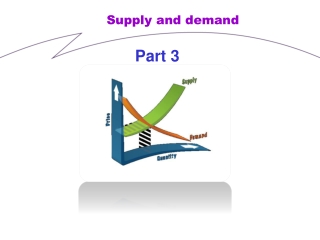
The Supply Curve • A curve or schedule showing the quantity of a good that sellers wish to sell at each price (usually drawn as a straight line) • Sellers must receive a higher price to produce additional units of a product to cover the higher opportunity costs of each additional unit • Why are marginal opportunity costs increasing? • Are they always increasing?
Supply curve: hamburgers in NYC Marginal cost = sellers reservation price= Lowest amount at which seller will produce good
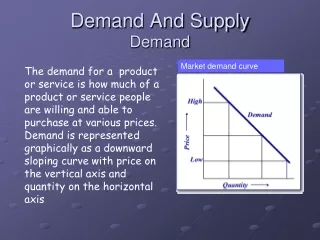
Demand curve • A schedule or graph that tells us the quantity of a good that buyers wish to buy at each price • As price of a good or service goes up, what happens to the amount you want to buy? • demand curve is downward-sloping • IS THIS TRUE?
Law of Demand? • Other things remaining the same, if the price of a good rises, demand for that good falls, and vice versa. • How true is this? • Stock markets • Land • Speculation
Demand curve: hamburgers in NYC buyers reservation price: The largest dollar amount the buyer would be willing to pay for a good
Why do buyers purchase a greater quantity at lower prices and vice-versa? • The Substitution Effect • The change in the quantity demanded of a good that results because buyers switch to substitutes when the price of the good changes • Do substitutes always exist? • The Income Effect • The change in the quantity demanded of a good that results because a change in the price of a good changes the buyer’s purchasing power