Comprehensive Data Acquisition and Management Architecture Overview
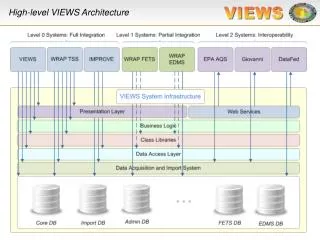
This document outlines a high-level architecture for a robust data acquisition and management system. It encompasses a Data Acquisition System that accepts various data schemas, automates online data extraction, and utilizes database replication. Metadata management, including validation and overlap detection, ensures integrity. The Data Import System scrubs and transforms data, which is then managed in the OLTP database. A Data Warehouse is utilized for archiving and querying, featuring automated backups and snapshot capabilities to maintain data integrity over time.

Comprehensive Data Acquisition and Management Architecture Overview
E N D
Presentation Transcript
Data Acquisition & Import • Data Acquisition System: • Accepts submission of data in a variety of schemas and formats • Can automatically extract data from known online sources • Uses database replication where possible • Initially imports data and metadata “as-is” into the source database • Metadata Import System: • Facilitates the entry of new metadata • Validates new metadata entries • Detects overlap with existing metadata • Data Import System: • Extracts data from the source database • Scrubs data and performs conversions • Maps source metadata to integrated metadata • Transforms the data into an integrated schema • Verifies and validates imported data • Loads data into the back-end OLTP system
Data Management • OLTP: • Functions as the “back-end” database • Fully relational and in 3rd normal form • Used for data import, validation, and management • Technologies: Microsoft SQL Server • Data Warehouse Generation System: • Extracts data from the OLTP • De-normalizes and transforms data • Loads data into the Data Warehouse • Builds table indexes • Archives “snapshots” of the database • Technologies: VB, stored procedures • Data Warehouse: • Functions as the “front-end” database • Uses a de-normalized “star schema” • Used for querying and archiving data • Automatically generated from the OLTP • Technologies: Microsoft SQL Server
Data Backup, Restore, and Archival • Backup and Restore System: • Automatically and periodically backs-up critical VIEWS databases • Restores database backups on demand • Replication and Archival System: • Vertically partitions the Data Warehouse by time period • Takes a full “snapshot” of the data warehouse at regular intervals • Creates a historical audit trail for verifying archive integrity
New and updated VIEWS tools Query Wizard Dataset Index Metadata Browser AirNow AQI Maps Webcams Page Glossary