
Understanding the Nitrogen, Carbon, Phosphorus, and Water Cycles in Ecosystems
E N D
Presentation Transcript
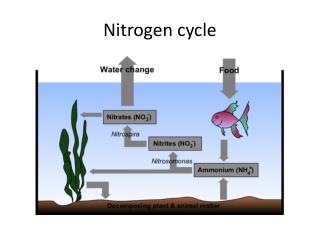
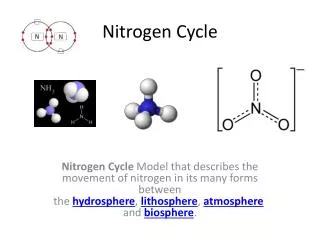
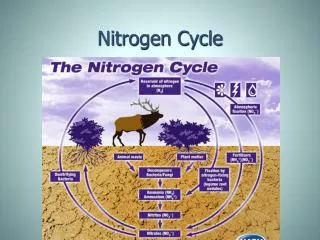
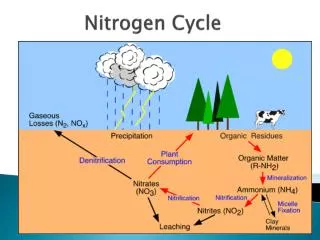
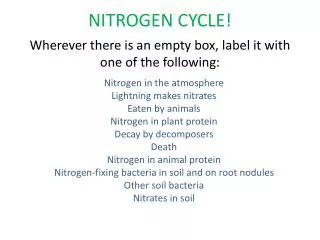
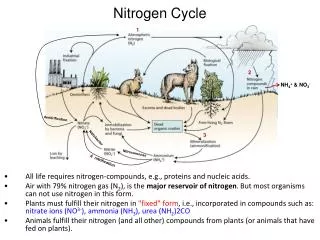
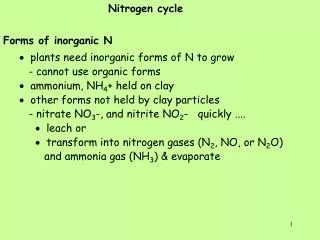
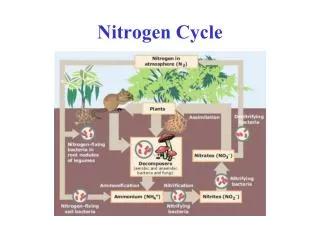
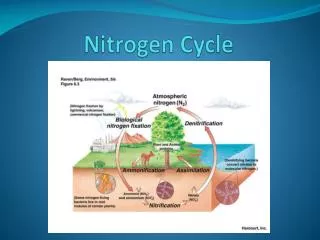
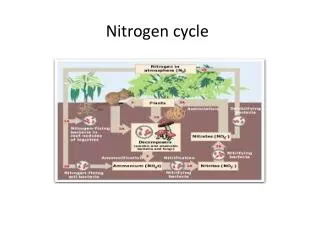
Nitrogen Cycle (1) Nitrogen gas (N2) in atmosphere (1) (3b)Plants & Animals (3b) (4) DenitrifyingBacteria (4) (3a)Nitrates “assimilated” into plant roots (3a) (2) (2) Nitrogen “fixed” by bacteria into Ammonium & Nitrates Nitrates (NO3-) (3c)Decomposers (bacteria & fungus) (3c) Ammonium (NH4+) Nitrites (NO2-)
Carbon Cycle (1) CO2 in atmosphere (1) (3b) Cellular Respiration (3b) (2) CO2 “fixed by plants through photosynthesis (2) (3d) Burning) (3d) (3a) (3) Animals eat plants (3c) Plants/Animals decompose (detritus) (3c)
Phosphorous Cycle (2a) (2a) Phosphates in plants/animals (2b) Phosphates in rock (2b) (1) Phosphates in soil (1) Phosphates in soil
Water Cycle (3) Condensation (Gas Liquid/solid) (3) (2) Evaporation (Liquid Gas) (2) (4) Precipitation (Liquid/solid) (4) (1) Surface Water (liquid) (1) (4a) Recharge/runoff (Liquid) (4a)