MAMMAL SKULLS
MAMMAL SKULLS. GENERAL CLASSIFICATION . CARNIVORE Obtains energy from flesh of other animals. Carnivore Example. GENERAL CLASSIFICATION. HERBIVORE Obtains energy from plant matter. Herbivore Example. GENERAL CLASSIFICATION. OMNIVORE Obtains energy from both plants and animals.
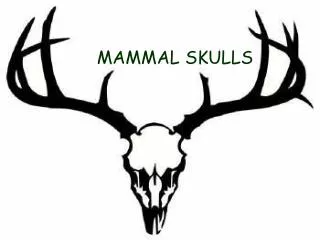

MAMMAL SKULLS
E N D
Presentation Transcript
GENERAL CLASSIFICATION • CARNIVORE • Obtains energy from flesh of other animals
GENERAL CLASSIFICATION • HERBIVORE • Obtains energy from plant matter
GENERAL CLASSIFICATION • OMNIVORE • Obtains energy from both plants and animals
Carnivorous Skull Characteristics • Small, sharp, narrow incisors (cutting and piercing meat) • Canines are well-developed and prominent (hold and tear flesh) • Premolars and molars are very serrated and sharp (cutting=scissors)
Where would the eyes be located in the skull of a predator? • BOTH ARE LOCATED IN FRONT!!!!!
HERBIVOROUS SKULL CHARACTERISTICS • Flat molars, premolars • Canines small/non existent • Rodents: squirrel, mice, beaver have large incisors that constantly grow • WHY???????
HERBIVOROUS SKULL CHARACTERISTICS • Ruminants: elk, deer, cow • Have incisors on lower jaw, but not upper jaw
Where are the eyes of herbivores located in the skull? • ON THE SIDES OF THE HEAD!!!
Omnivores… • Tend to have a combination of the 2 • Eyes on front • Teeth combine large canines and flat molars….
Journal Entry # 2 1/30/14 “Mammal Skulls” Number from 1-30