Fire Extinguisher Primer
100 likes | 168 Vues
Learn about the combustion process, fire classes, types of fire extinguishers, and how to use them effectively. Understand the importance of Halon fire extinguishers and their alternatives.


Fire Extinguisher Primer
E N D
Presentation Transcript
Fire Extinguisher Primer 10-4 training 10 Slides, 4 minutes
Fire Safety & Fire Extinguisher Use The Combustion Process • Three components • Need all three components to start a fire • Fire extinguishers remove one or more of the components.
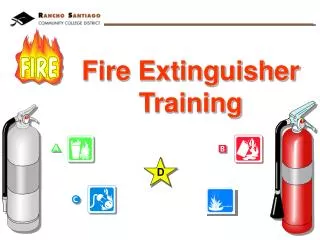
Fire Classes ATrash Wood Paper BLiquids Grease • wood • paper • cloth • etc. • gasoline • oil • grease • other solvents • magnesium • sodium • potassium • titanium • other flammable metals CElectrical Equipment COMBUSTIBLE • computers • fax machine • other energized electrical equip. D METALS
Fire Classes (cont.) CLASS K FIRES • Recently recognized by NFPA 10 • Fires involving combustible oils, lards and fats in commercial cooking. • Standard Dry Chem ABC extinguishers work well enough on K fires • However, special K fire extinguishers can be purchased. K Cooking Media
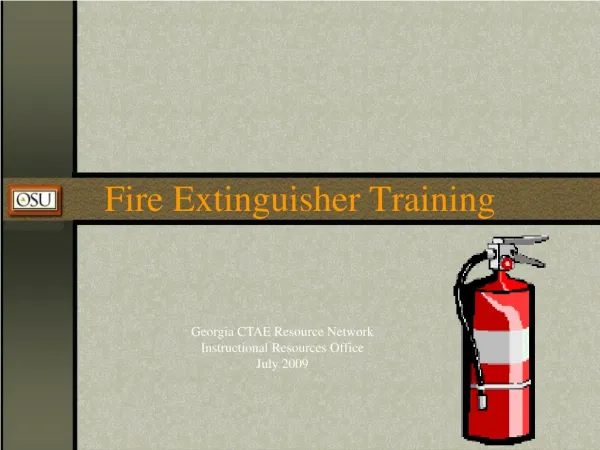
Fire Extinguisher Anatomy PRESSURE GAUGE (not found on CO2 extinguishers) DISCHARGE LEVER CARRYING HANDLE LOCKING PIN HOSE DATA PLATE DISCHARGE NOZZLE BODY
Fire Extinguisher Types PRESSURIZED WATER • Class “A” fires only • 2.5 gal. water (up to 1 minute discharge time) • Has pressure gauge to allow visual capacity check • 30-40 ft. maximum effective range • Can be started and stopped as necessary • Extinguishes by cooling burning material below the ignition point.
Fire Extinguisher Types (cont.) CARBON DIOXIDE (CO2) • Class “B” or “C” fires • 2.5-100 lb. of CO2(8-30 seconds discharge time) • Has NO pressure gauge--capacity verified by weight • 3-8 ft. maximum effective range • Extinguishes by smothering burning materials • Effectiveness decreases as temperature of burning material increases.
Fire Extinguisher Types (cont.) MULTIPURPOSE DRY CHEMICAL • Class “A”, “B”, or “C” fires • 2.5-20 lb. dry chemical (ammonium phosphate) 8-25 seconds discharge time) • Has pressure gauge to allow visual capacity check • 5-20 ft. maximum effective range • Extinguishes by smothering burning materials.
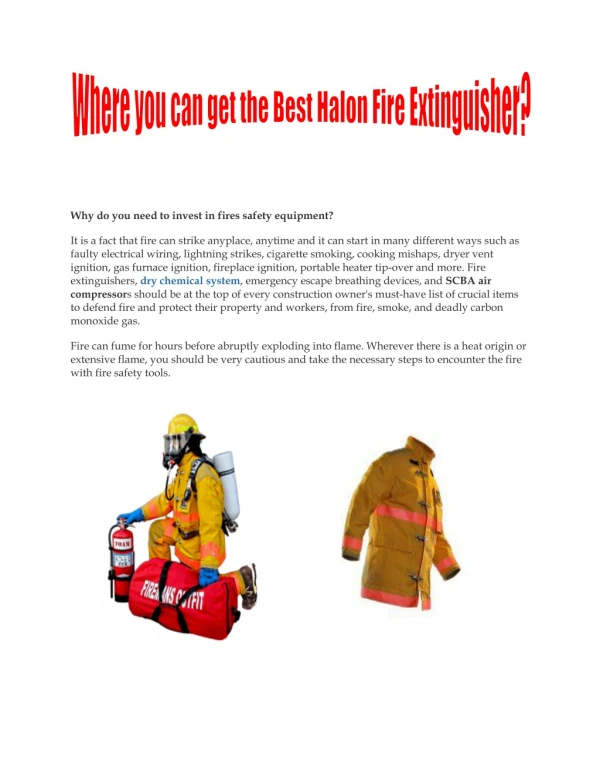
Halon • Halon fire extinguisher is important device to have, especially for emergency situations. It contains a gas that interrupts the chemical reaction that takes place when fuels burn. Halon fire extinguisher is often used to protect valuable electrical equipment since they leave no residue. • Predominantly found around expensive electronics, computers, server rooms, etc. • Since Halon manufacturing was banned, a hunt has been on for something that works as well. According to the Halon Alternatives Research Corp., more than 20 different kinds of alternatives exist as direct replacements. • Halon Replacement • Typically inert gases and halocarbon compounds.
Rule of Thumb • Regardless of the extinguisher, if the fire is bigger than you, it’s TOO big to fight with a single unit • Expect about one second of use per pound of extinguisher • 2 pound kitchen unit? Two seconds. • Only use an extinguisher if you are SURE you have a safe escape.