From Puritans to Tobacco: The Rise and Challenges of Jamestown Colony
The establishment of Jamestown in 1607 marked a significant moment in American history, driven by both religious and economic motivations. Puritans sought to escape persecution and reform the Church of England, while economic hardships fueled emigration from England. Initial struggles led to dire consequences, with settlers facing starvation and disease. Leadership troubles and relations with Native Americans, particularly Chief Powhatan, were critical as the colony fought for survival. The introduction of tobacco farming, led by John Rolfe, eventually brought success but also complex socio-economic tensions.


From Puritans to Tobacco: The Rise and Challenges of Jamestown Colony
E N D
Presentation Transcript
Religious reasons to emigrate • Puritans – people who wanted to purify the Catholic Church • Supreme authority of the Bible • Ministers to be elected • King James I saw this as a challenge to the Church and made many Puritans ready to leave England.
Economic reasons to emigrate • England was producing more wool than needed and prices fell. • Lots of unemployment and no job opportunities
Joint-stock companies • pool money for many investors for large projects (ie – settle ‘new world’)
Several unsuccessful attempts to settle • Walter Raleigh settled Roanoke • Harsh winter • Disappeared – no bodies • “CRO” carved on a post
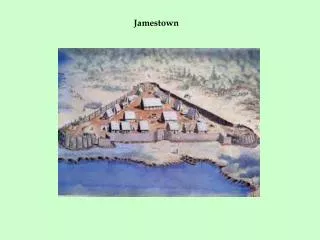
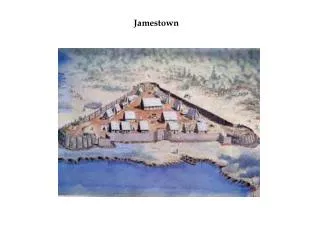
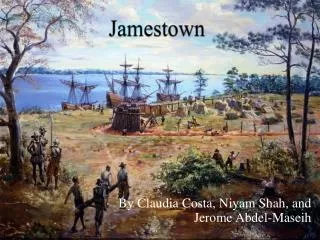
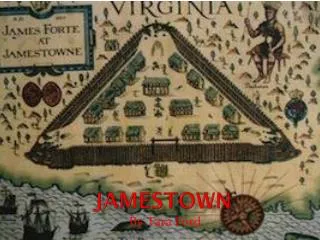
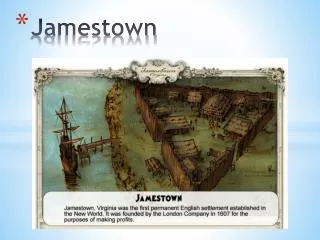
King James sent the Virginia Company to colonize the Americas (1606/7) Landed in Virginia and named it Jamestown
Jamestown was a PROBLEM! • Too close to the sea – made it swampy • Mosquitoes spread malaria • No one knew how to grow crops or raise livestock • 53/200 were alive after one year
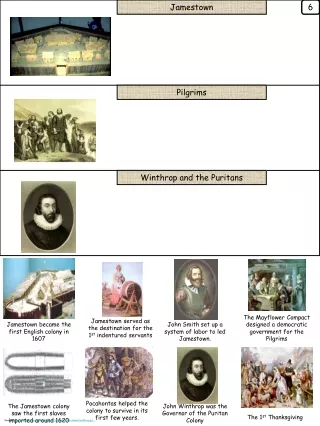
Cultures combine • John Smith – Became leader of Jamestown • Chief Powhatan – leader of the local Native America tribe • WHAT DO YOU THINK HAPPENS?
Powhatan agreed to trade with John Smith, the only thing that kept Jamestown alive in the beginning.
The starving time • There was not enough food for all settlers, but Smith and de la War had headed back to England.
Settlers began stealing food from the Native Americans and were attacked. • Settlers began eating dogs, rats, snakes, toadstools, and horsehides. • Some ate the corpses of buried settlers.
60 settlers remained, but they started creating smaller towns in Virginia, spreading away from Jamestown.
England was not happy with how things were going and sent a replacement – Lord de la War, who brought 400 new settlers
Lord de la War took more settlers to Jamestown and put them under harsh laws.
BROWN GOLD • To bring money in and save the colony, the settlers began growing and selling TOBACCO. • John Rolfe was responsible for the success. • Increased Population • Headright System • Indentured Servitude
House of burgesses • First representative gov’t • Legislation • Taxation • In Parliament???
Virginia became a royal colony – ran by a king-appointed governor 1624
Relations deteriorate Colonial-Indian Relations • King Phillip’s War (1675-1678) • Sassamon • New England • ‘the spark’ • Powhatan’s Revolt Economic Tension in Colonies • Headright -> Indentured • Taxes • Bacon’s Rebellion (1676) • Western colonists vs. Doeg Tribe • Bacon vs. Berkley