Understanding the Journey of Raw Materials to Finished Goods in Canada
120 likes | 246 Vues
This overview explores the categories of goods and services, emphasizing the journey of raw materials from sources like farming, fishing, and logging through to processed and finished goods. It illustrates how raw materials, like tomatoes from farmers or logs from forests, are transformed and marketed. The text also highlights Canada's role in exporting and importing these materials. Additionally, it distinguishes between consumer and industrial goods and explores the significance of services, showcasing examples from industries like food and manufacturing.


Understanding the Journey of Raw Materials to Finished Goods in Canada
E N D
Presentation Transcript
Raw Materials • Come from mining companies, farms, fishing boats, oil rigs, loggers, etc. • For example, a farmer markets tomatoes to a ketchup maker, or a forestry company markets logs to a paper mill • Canada exports a lot of raw materials • We also import many raw materials (ex: oranges) • Raw materials are usually marketed to business
Processed Goods • The nature of the product is changed, for example pasteurizing milk, or pressing applies into juice, or creating pulp from wood • Processed goods may be sold as finished goods, or as semifinished goods • Semifinished goods are marketed to manufacturers
Finished Goods • Do not require any further processing • May be a consumer good (ie Nike Shoes) or an industrial good (car seat) • Consumer goods are used by the general public • Typically sold by retailers to consumers • Can be sold to industry • Ex: Original Maple Bat Company sells to major league baseball teams as well as consumers • Industrial goods are used by a business to make other products, and can be any of raw materials, processed goods, or finished goods
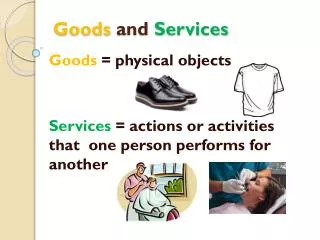
Services • Activities performed for others • Just like goods, can be marketed to consumers or industry • Ex: Piano tuner • If they tune pianos for a symphony, it’s an industrial service • If they tune pianos in people’s homes, it’s a consumer service • Most businesses focus on one or the other
Jones Soda • Article and questions