Fascinating World of Invertebrates: Diversity and Impact
Discover the incredible diversity of invertebrates, which make up 95-97% of all animal species. From the smallest rotifer at 0.1-0.5 mm to the colossal squid reaching up to 46 feet, invertebrates play crucial roles in ecosystems as pollinators, decomposers, and more. Explore notable species like the migratory monarch butterfly and the magnificent coral polyp found in the Great Barrier Reef. Delve into the anatomy and classification of various groups including arachnids, insects, crustaceans, and mollusks, and understand their vital impact on human life.

Fascinating World of Invertebrates: Diversity and Impact
E N D
Presentation Transcript
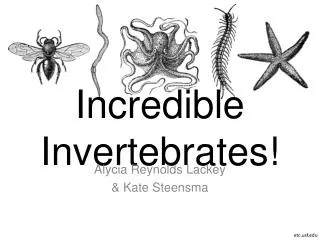
Incredible Invertebrates! Alycia Reynolds Lackey & Kate Steensma etc.usf.edu
in·ver·te·brate/inˈvərtəbrit/ Noun: an animal lacking both a skull and a backbone such as an arthropod, mollusk, annelid, etc. Invertebrates include between 95-97% of all animal species ngm.nationalgeographic.com
Impact on humans Crop destroyers Decomposers Pollinators Disease vectors Clam chowders Honey makers newasiancuisine.com, wikipedia.org, malaria-symptoms.org
Notable invertebrates Coral polyp: ~1-3 mm Largest invertebrate: Colossal Squid ~39-46 feet long Smallest invertebrate: Rotifer ~0.1-0.5 mm Largest invertebrate colony: Great barrier reef Over 1,600 miles long wikipedia.org, microscopy-uk.org.uk
Notable invertebrates Mass migration: Monarch butterfly Sometimes travels up to 3,000 miles Performer: Australian peacock spider Woos his mate with an elaborate dance monarchwatch.org, Jurgen Otto on flickr.com
Michigan invertebrates • Michigan has about ~20,000 species of invertebrates, including: 0 legs 0 legs 6 legs Annelids Mollusks Insects 10-14 legs 20+ legs 8 legs Arachnids Myriapods Crustaceans animals.howstuffworks.com
Basic anatomy Arachnids (spiders & ticks): -8 legs -2 body segments -no antennae Insects: -6 legs -3 body segments -antennae -wings (sometimes)
Basic anatomy Myriapods (centi- & millipedes): -20+ legs -many body segments -antennae Crustaceans (pillbugs and sowbugs): -10-14 legs -many body segments -antennae
Basic anatomy Annelids (segmented worms): -no legs -many body segments -no antennae Mollusks (slugs, snails): -no legs -no body segments -feelers (not antennae) -shell (sometimes)