
The Nitrogen Cycle
E N D
Presentation Transcript
The Nitrogen Cycle Section 4.3 BC Science Probe 10 Page 92
The Importance of Nitrogen • The element nitrogen is extremely important for all organisms. • Living things need nitrogen to do the following things…
The Importance of Nitrogen • 1. Make DNA and RNA (nucleic acids) • DNA is made of nucleotides. Nitrogen is found in the bases of the nucleotides.
The Importance of Nitrogen • 2. Forms amino acids that bond together to form proteins. • Nitrogen is found in all 20 amino acids.
The Importance of Nitrogen • Nitrogen is also needed by plants. They cannot make chlorophyll for photosynthesis without it!
Sources of Nitrogen • Just like carbon, nitrogen is very easy to find. • 78% of Earth’s atmosphere is nitrogen gas. • We actually breathe in 4 times more nitrogen than oxygen!
Sources of Nitrogen • But this gaseous nitrogen (N2) is not a usable form for living things because…
Sources of Nitrogen • In order to be able to use nitrogen, it must be changed into a usable compound form. • Usable nitrogen compounds: • Ammonia – NH3- compound • Ammonium – NH4+ • Nitrate – NO3- polyatomic ions • Nitrite – NO2-
Sources of Nitrogen • The process of changing gaseous nitrogen (N2) into a usable compound is called nitrogen fixation. • Nitrogen fixation is one part of the nitrogen cycle. • The cycling of nitrogen back and forth between the abiotic and biotic environments.
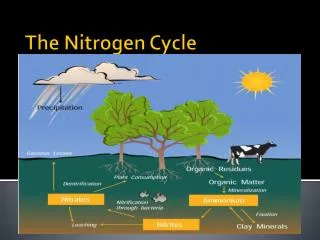
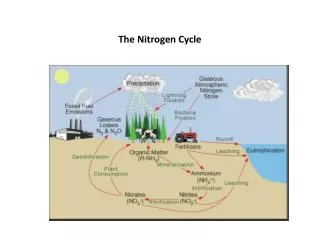
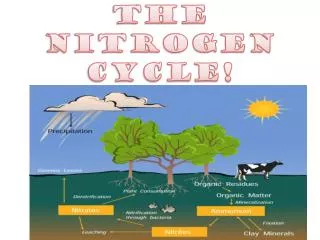
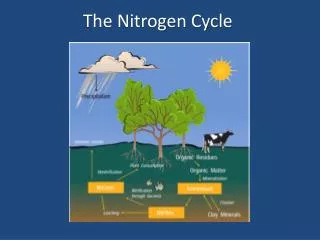
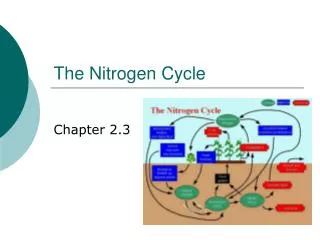
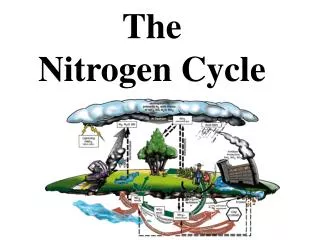
The Nitrogen Cycle • Nitrogen, just like carbon, is cycled back and forth between the biotic and abiotic parts of the biosphere in a series of steps.
The Nitrogen Cycle • Step 1: Nitrogen fixation • N2 from the atmosphere combines with hydrogen N2 + H2 → NH3 (ammonia) • This happens through bacteria on the roots of legumes (beans, peas, peanuts, alfalfa, clover, alders…) • Excess NH3 dissolves in H2Oto become NH4+ and is used by plants.
The Nitrogen Cycle • Step 2: Nitrification • NH4+ is converted to nitrates and nitrites by nitrifying bacteria in the soil. • The nitrates and nitrites get taken up by plant roots from the soil for growth. • They use them to make up DNA, RNA and protein. • Animals get their nitrogen by eating plants, or by eating other organisms that ate plants.
The Nitrogen Cycle • Step 3: Decomposition • Animals and plants die, then decompose • Decomposers (nitrifying bacteria) break down nitrogen in DNA and proteins into ammonia and nitrates.
The Nitrogen Cycle • Step 4: Denitrification • Denitrifying bacteria change nitrates and ammonia back into N2 gas. • This causes the soil to lose nitrates. • Adding oxygen to the soil reduces denitrification because the denitrifying bacteria do not like oxygen (anaerobic)
Assignment • CYU 4.3 • Page 95 • # 1-11, 13, 15, 17