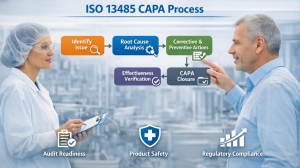
ISO 13485 is an internationally recognised Quality Management standard specially for Medical Device Manufacturers and related organisation to it. One of its strongest areas of focus is documentation. However, many organizations struggle with a basic but critical concept: the difference between documents and records. Understanding this distinction is essential for effective compliance, successful audits, and consistent product quality.
Overview of ISO 13485 Documentation Requirements
ISO 13485 places strong emphasis on documented procedures and records to ensure medical device quality, safety, and regulatory compliance. Documentation defines how processes are planned and controlled, while records provide objective evidence of implementation. Regulators and auditors rely on accurate, well-maintained documentation to verify consistent compliance across the medical device lifecycle.
What Are Documents in ISO 13485?
Definition of ISO 13485 Documents
The ISO 13485 documents define “what should be done”. They provide instructions, policies, and guidance that control how processes are planned and performed. Documents are controlled and may change over time as processes improve or regulations evolve.
Examples of ISO 13485 Documents
Typical ISO 13485 documents include:
• Quality Manual
• Quality Policy and Quality Objectives
• Documented procedures
• Standard Operating Procedures (SOPs)
• Work instructions
• Risk management plans
• Regulatory compliance procedures
Control of Documents
ISO 13485 requires documents to be approved before use, reviewed periodically, updated when necessary, and distributed in a controlled manner. Version control is essential to ensure that only the latest approved documents are in use.
What Are Records in ISO 13485?
Definition of ISO 13485 Records
Records provide evidence that activities were performed as planned. Unlike documents, records are historical and cannot be revised once created. They demonstrate implementation, compliance, and effectiveness of the Medical Device QMS.
Examples of ISO 13485 Records
Common ISO 13485 records include:
• Training and competency records
• Calibration and maintenance records
• Inspection and test reports
• Batch manufacturing records
• Internal audit reports
• Corrective and preventive action (CAPA) records
Control of Records
Records must be identifiable, traceable, protected from damage or loss, and retained for defined periods. Proper storage and easy retrieval are critical during audits and regulatory inspections.
Key Differences Between Documents and Records in ISO 13485
Documents define processes and expectations, while records prove execution. Documents are dynamic and subject to revision, whereas records are static once completed. From an audit perspective, documents show system design, while records demonstrate system implementation and effectiveness.
For a detailed understanding of how ISO 13485 documentation supports compliance, product safety, and regulatory confidence, readers can refer to the blog “What Is ISO 13485 Documents and Why Are They Critical?”. The article explains the role of quality manuals, procedures, SOPs, and records in building an effective medical device quality management system and highlights why well-structured documentation is essential not only for certification but also for ongoing regulatory compliance throughout the device lifecycle.