In today’s competitive business environment, organizations must operate efficiently while meeting multiple compliance requirements. An Integrated Management System (IMS) allows companies to manage quality, environmental, and occupational health & safety standards within one framework. However, the real strength of an IMS lies in its documentation. Well-structured IMS documents play a crucial role in improving business efficiency by standardizing processes, reducing errors, and ensuring consistency across operations.
What is IMS Documentation?
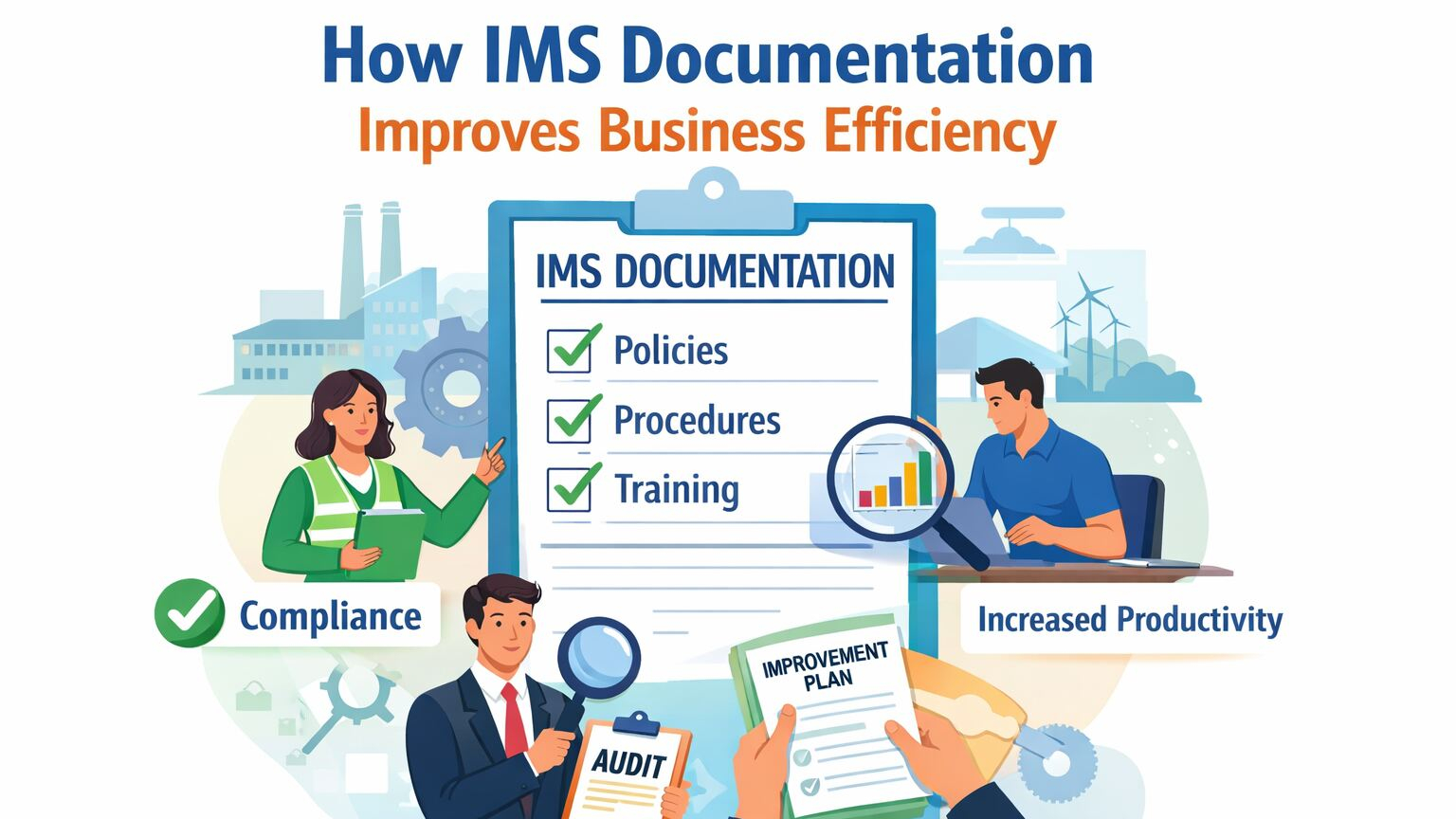
The IMS documentation refers to the collection of policies, manuals, procedures, work instructions, records, and forms used to manage multiple management systems together. Instead of maintaining separate documents for each standard, IMS combines them into a single set of documents. This integration simplifies management and makes it easier for employees to follow unified procedures.
Improving Communication and Role Clarity
The IMS documentation clearly defines responsibilities and authority. Employees know exactly what is expected of them, reducing misunderstandings. Clear instructions improve internal communication and teamwork. When everyone follows the same documented process, coordination between departments becomes smoother.
Enhancing Compliance and Risk Management
IMS documents help organizations meet ISO standard requirements and legal obligations. Risk assessments, control measures, and emergency procedures are documented to ensure proper risk management. This structured approach minimizes workplace incidents, environmental impacts, and quality failures, creating a safer and more compliant workplace.
Supporting Training and Employee Development
IMS documents serve as valuable training tools. New employees can quickly learn procedures using manuals and work instructions. Regular training based on documented processes improves skill development and performance. This reduces dependency on verbal instructions and ensures consistency in knowledge transfer.
Increasing Productivity and Reducing Costs
Clear documentation minimizes errors, rework, and downtime. Employees spend less time seeking guidance, allowing them to focus on productive work. Standardized processes reduce waste and operational costs. Over time, organizations experience improved output with fewer resources.
Facilitating Audits and Performance Monitoring
IMS documentation makes internal and external audits easier. Auditors can quickly review records and verify compliance. Performance indicators documented in records help management track progress and identify improvement areas. Data-driven decisions improve operational control.
Enabling Continual Improvement
Regular reviews of IMS documents help identify gaps and improvement opportunities. Organizations can update procedures based on feedback, audit findings, and performance results. This supports continual improvement and long-term business growth.
Conclusion
IMS documentation is a powerful tool for improving business efficiency. By standardizing processes, improving communication, ensuring compliance, and supporting training, organizations can operate more effectively. Maintaining accurate and updated IMS documents helps businesses achieve consistent performance, reduce costs, and drive sustainable success.
If someone is new to Integrated Management Systems and want a detail understanding of the basics then, it’s recommended to read the detailed guide on “Integrated Management System Explained for Beginners”. It explains what an Integrated Management System is, how it works, and why it is beneficial for organizations managing multiple ISO standards. This blog will help you build a strong foundation before exploring advanced topics related to IMS documentation and implementation.