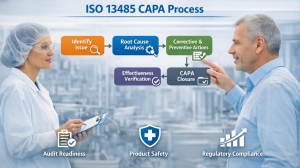
ISO 45001 is an international standard for Occupational Health and Safety (OH&S) Management System. Its primary goal is to reduce workplace safety by preventing injuries, illness and fatalities in the organisation. At the heart of ISO 45001 lies documented information, commonly referred to as ISO 45001 documents. These documents provide a structured framework that defines how an organization manages health and safety risks. This article explains the purpose of ISO 45001 documents, the outcomes they deliver, and the core components that make up an effective documentation system.
What Is ISO 45001 Documents?
ISO 45001 documents are written policies, procedures, plans, and records that describe and support the organization’s OH&S management system. They guide employees on how safety activities should be performed and provide evidence that processes are being followed. It is important to distinguish between documents and records: documents describe what should be done, while records demonstrate what has been done. Together, they help organizations systematically identify hazards, control risks, and comply with legal and regulatory requirements.
Why every organisation needs it?
Every organization needs ISO 45001 documentation because it provides a structured approach to managing occupational health and safety risks. It helps identify hazards, prevent workplace injuries, ensure legal compliance, and promote a strong safety culture. Proper documentation also ensures consistent safety practices, improves employee awareness, supports continual improvement, and demonstrates commitment to protecting workers and business sustainability.
Purpose of ISO 45001 Documents
The main purpose of ISO 45001 documentation is to establish a consistent and controlled approach to occupational health and safety. Documented processes ensure that safety practices are not dependent on individuals but are standardized across the organization. These documents support hazard identification, risk assessment, and the implementation of appropriate controls. They also help organizations demonstrate compliance with applicable laws and regulations. Additionally, ISO 45001 documents provide objective evidence during internal and external audits, making certification and ongoing compliance easier to manage.
Expected Outcomes of ISO 45001 Documentation
Effective ISO 45001 documentation leads to measurable improvements in workplace safety. One of the most significant outcomes is a reduction in accidents, incidents, and near misses due to clearly defined procedures and controls. Documentation also improves worker awareness and participation, as employees better understand their roles and responsibilities related to safety. Organizations benefit from stronger legal compliance and reduced risk of penalties or disruptions. Over time, consistent documentation supports continual improvement, enabling organizations to monitor performance, identify gaps, and enhance their OH&S management system.
Core Components of ISO 45001 Documents
OH&S Policy and Objectives
The foundation of ISO 45001 documentation is the OH&S policy, which outlines the organization’s commitment to providing safe and healthy working conditions. This is supported by measurable OH&S objectives and action plans that drive continual improvement.
Risk Assessment and Hazard Control Documents
These include hazard identification and risk assessment records, along with documentation of the hierarchy of controls. They ensure risks are systematically identified, evaluated, and controlled.
Roles, Responsibilities, and Competence
Clear documentation defining roles and responsibilities ensures accountability at all levels. Training and competence records demonstrate that employees are capable of performing their duties safely.
Operational and Emergency Control Procedures
Safe work procedures, operational controls, and emergency preparedness plans guide employees in normal and emergency situations, reducing the likelihood and impact of incidents.
Performance Monitoring and Improvement
Incident reports, corrective action records, and monitoring data help organizations track safety performance and implement improvements where needed.
Conclusion
ISO 45001 documents are more than a certification requirement; they are practical tools for managing workplace health and safety. By clearly defining processes, responsibilities, and controls, these documents help organizations achieve safer working conditions, improved compliance, and continual improvement in OH&S performance. When effectively implemented and maintained, ISO 45001 documentation becomes a strong foundation for long-term workplace safety excellence.