Enhancing Careers: Data-Driven Insights for BACH’s Coaching Program Success
This document outlines the strategies for collecting, reporting, and analyzing data on career tracking and advancement within BACH’s Coaching Program. It emphasizes performance measures that reveal the program's effectiveness in retaining individuals and promoting job advancements. Key metrics include retention rates over two years and advancements into new jobs. By following a structured approach—articulating results, setting performance measures, collecting data, reporting findings, and analyzing outcomes—healthcare institutions can better gauge improvement for both participants and their organizations.

Enhancing Careers: Data-Driven Insights for BACH’s Coaching Program Success
E N D
Presentation Transcript
(1) ARTICULATE RESULTS (2) SET PERFORM. MEASURES Career Tracking and Advancement: BACH’s Data Collection, Reporting & Analysis Strategies (3) COLLECT DATA Pamela Paulk, Chair, BACH Board of Directors Ronald Hearn, BACH Executive Director Barbara Hopkins, Principal, Quick Study Consulting, LLC (4) REPORT DATA (5) ANALYZE RESULTS
(1) ARTICULATE RESULTS Healthcare institutions, Underemployed workers End conditions: The ways in which customers are better off when your program works as it should. • Performance Measures: • % of individuals who are retained for 2 years; • % of individuals who advance to new jobs. (2) SET PERFORM. MEASURES RESULTS - BASED ACCOUNTABILITY (3) COLLECT DATA (4) REPORT DATA Performance Management: Managing the performance of your program so that your customers are better off. For the BACH Coaching Program, Five Steps (5) ANALYZE RESULTS
(1) ARTICULATE RESULTS (2) SET PERFORM. MEASURES (3) COLLECT DATA (4) REPORT DATA (5) ANALYZE RESULTS
(1) ARTICULATE RESULTS (2) SET PERFORM. MEASURES (3) COLLECT DATA (4) REPORT DATA (5) ANALYZE RESULTS
(1) ARTICULATE RESULTS (2) SET PERFORM. MEASURES Results: If our coaching program works as it should, how will our hospital and incumbent worker customers be “better off?” • Improved rates of retention for coaching participants (& lower turnover/vacancy rates for hospitals); • Improved rates of job advancement and wage gain for coaching participants. (3) COLLECT DATA (4) REPORT DATA (5) ANALYZE RESULTS
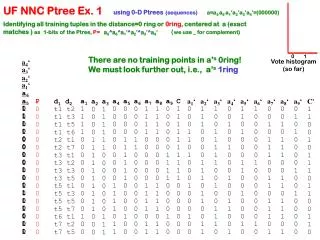
(1) ARTICULATE RESULTS • Performance measures are data elements that tell us whether we’re achieving results. • “All performance measuresthat have ever existed … in the history of the universe can be derived from thinking about the quantity and quality of effort and effect.” Mark Friedman, Trying Hard is Not Good Enough, p. 67. (2) SET PERFORM. MEASURES QUANTITY QUALITY (3) COLLECT DATA EFF0RT D B (4) REPORT DATA EFFECT A C (5) ANALYZE RESULTS Importance Scale (Most to Least): A, B, C, D Control Scale (Most to Least): D, B, C, A “We have the least control over the most important measures.” Mark Friedman, Trying Hard is Not Good Enough, p. 77.
(1) ARTICULATE RESULTS (2) SET PERFORM. MEASURES (3) COLLECT DATA (4) REPORT DATA (5) ANALYZE RESULTS Source: BACH ETO Database, February 2010
(1) ARTICULATE RESULTS (2) SET PERFORM. MEASURES (3) COLLECT DATA (4) REPORT DATA (5) ANALYZE RESULTS
(1) ARTICULATE RESULTS (2) SET PERFORM. MEASURES (3) COLLECT DATA (4) REPORT DATA (5) ANALYZE RESULTS
(1) ARTICULATE RESULTS (2) SET PERFORM. MEASURES (3) COLLECT DATA (4) REPORT DATA (5) ANALYZE RESULTS
(1) ARTICULATE RESULTS (2) SET PERFORM. MEASURES (3) COLLECT DATA INITIAL TRAINING ENROLLMENTS SUBSEQUENT TRAINING ENROLLMENTS (4) REPORT DATA Enrolled in RT: 12 Completed RT: 6 Enrolled & Still Enrolled in 2yr: 2 Enrolled in & completed NE: 4 Enrolled & Still Enrolled in 2yr: 4 Enrolled and Still Enrolled in 4yr: 1 Enrolled in NE: 78 Completed NE: 67 (5) ANALYZE RESULTS Enrolled in CNA: 14 Completed CNA: 14
(1) ARTICULATE RESULTS (2) SET PERFORM. MEASURES (3) COLLECT DATA (4) REPORT DATA *N=211 hours of career advancement (CA) and retention services (RS) provided during year 1 to coachees retained for 24 months at institutions 2, 13 and 34. (5) ANALYZE RESULTS