Download
1 / 10
100 likes | 238 Vues
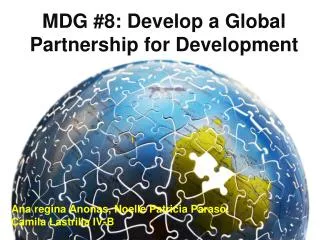
The urgency to develop global partnerships for sustainable development is critical as official development assistance (ODA) from OECD-DAC countries has declined for the second consecutive year, jeopardizing vital commitments for 2010. Substantial increases in aid are necessary to double support to Africa. Meanwhile, market access remains limited for developing countries, overshadowed by rich countries' agricultural subsidies. Trade-related assistance needs enhancement, particularly for basic social services and essential medications, as well as initiatives to bridge the digital divide and improve communication infrastructure.

E N D
Developmentaidfallsfor the secondyear, jeopardisingcommitmentsfor 2010 Official development assistance from OECD-DAC countries 1990 - 2007
Development assistance will have to increase substantially to double aid to Africa by 2010 Net official development assistance from OECD-DAC countries as a proportion of donors’ gross national income 1990-2007
Market access for most developing countries has little improved Proportion of development country imports from developing countries ,excluding arms and oil,admitted free of duty and developed countries average tariffs on imports of key products of from developing countries, 2000-2006
Domestic agricultural subsides by rich countries overshadow money spent on development aid Official development assistance from OECD-DAC countries and agricultural support in OECD countries, 2000,2004 and 2006
Trade-related assistance needs to be icreased Proportion of total bilateral, sector-allocable ODA of ODEC-DAC donors to basic social services (basic education, primary health care, nutrition, safe water and sanitation) and trade-related technical assistance and capacity-building 2001-2006
Domesticagriculturalsubsidesbyrichcountriesovershadowmoneyspent on developmentaid External debt service payment as proportion of export revenues, 1990-2006
Poor availability and high prices are barriers to access to essential drugs in developing countries • Governments need to define goods and objectives for the pharmaceutical aid and to identify strategies to meet them • Where medicines are usually provided at a low cost or free-of –charge, people are often very poor • In all regions availability is better in the private sector, but it can still be poor • Some pharmaceutical manufacturers have lowered their prices to public health systems in developing countries to accord with the purchasing power of governments and households • Generic drugs offer an alternative to higher priced original and brand-named medicines
Mobile phones are expandingcommunications in developingcountries Number of telephone subscriptions and internet connections per 100 world population, 1990-2006
Internet use is increasing rapidly, but the poorest regions lag behind