Is It Safe to Drink from Copper?
0 likes | 1 Vues
Discover if pure copper water bottles are safe for daily use. Learn about antimicrobial copper bottles' benefits, safe-use tips, and simple care for your copper vessel.


Is It Safe to Drink from Copper?
E N D
Presentation Transcript
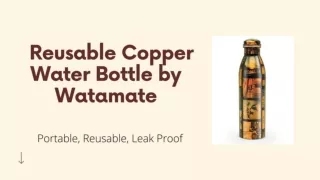
Is It Safe to Drink from Copper? Households in all the Old Civilizations stored their water in Copper Vessels. Today, that same habit is showing up in modern kitchens and gym bags across the US, often as a pure copper water bottle. The reason is simple: people want a cleaner daily hydration routine, with fewer plastics and fewer unknowns. Yes, drinking water stored in copper is generally safe for most healthy adults when done correctly. Copper is an essential mineral, and copper surfaces have documented antimicrobial behavior. But “safe” depends on using copper the right way: plain water, sensible storage time, and proper cleaning.
Benefits of Drinking from Copper Copper is not a “magic” metal but a practical one. When you store plain water in copper, a small amount of copper ions mixes with the water. This is the real value of the ritual - fill, rest, sip and repeat. • Antimicrobial properties One reason copper has stayed relevant for centuries is hygiene. Research on metallic copper surfaces shows that microbes can be rapidly inactivated on copper under the right conditions. That’s why many shoppers look for antimicrobial copper bottles for everyday water storage. Keep your expectations realistic, though, as copper supports safer storage habits, but it does not replace clean water, cleaning, and common sense. • Aids digestion Copper water is often discussed in the same breath as digestion. The most responsible way to frame this is: some people feel it supports their routine— especially when they use it as a steady “morning water” habit instead of skipping hydration. Ayurveda has long linked copper-stored water with digestive balance, which is one reason the practice continues today. • Supports the immune system Copper is an essential nutrient involved in normal body functions, including immune health and antioxidant defense. This does not mean “more is better.” Most people already get copper through food. A copper bottle is best treated as a mindful storage choice rather than a supplement strategy. • Traditional Ayurvedic practice In Ayurveda, storing water in copper overnight and drinking it in the morning is a common recommendation. We at Kaarigar believe that copper water must be a daily ritual—simple, consistent, and focused on plain water use (not juices or flavored drinks). Safety Tips to Keep Drinking from Copper Bottles Copper is safe when your use is controlled. The copper content in water from one properly used bottle is typically much lower than the FDA-approved daily
requirement, so you can drink the entire bottle and still stay within safe limits. Follow a few habits, and you will get the upside of copper storage without turning it into an experiment. • Store water for at least 4-5 hours (overnight recommended) A practical, conservative window is 4-5 hours. Many people fill the bottle at night and drink the water the next morning. Longer storage can increase copper levels in the water, which is why several copper-vessel makers advise against leaving water untouched for over 12 hours. Understanding the morning copper water routine. • Clean vessels in intervals with lemon and salt Copper needs routine care. Every few weeks, clean with lemon + salt (or vinegar + salt) to remove buildup and keep the inside fresh. Avoid harsh, abrasive cleaners that can damage the surface. • Avoid acidic beverages (juice, alcohol) Copper can react with acidic liquids. Hence, keep it simple and use copper for water only. Do not store lemon water, sports drinks, juice, or alcohol in copper. • Use pure copper, not copper-plated items Choose a vessel that is clearly described as “pure copper” (not plated) and sold by a brand that explains its materials. Plated items can wear over time and may expose a base metal you did not intend to drink from. Kaarigar, for example, highlights certified copper and a natural, uncoated interior for water contact. • Limit to 2–3 glasses per day Moderation matters because copper adds to your total daily intake from food, water, and supplements. For adults, the tolerable upper intake level is 10,000 mcg (10 mg) per day from all sources. The Kaarigar Bottle will provide 0.9 mg of copper, which is well below the daily minimum requirement. If you are already taking mineral supplements, be extra careful.
When Copper Isn’t Safe Copper becomes unsafe when the vessel is damaged or poorly maintained. Risk also rises for specific medical conditions that affect copper metabolism. When in doubt, pause and ask a clinician. • Damaged or corroded vessels A normal dark patina is common and not the same as rust. But if you see heavy green crusting, pitting, flaking, or a strong metallic odor that does not improve after cleaning, stop using the vessel for drinking water. It isn’t copper and hence, replace it immediately. • People with Wilson’s disease If you have Wilson’s disease, your body cannot clear copper properly. Copper builds up and can damage the liver and nervous system. People with Wilson’s disease should avoid copper exposure unless their clinician specifically advises otherwise. • Poorly maintained copper items Skipping cleaning, leaving water for long stretches, or storing acidic drinks creates the perfect setup for excessive copper in your drink. Copper is a “low effort” routine, not a “no effort” routine. Explore 8 unique copper vessel usage other than copper bottles. Drinking water stored in copper is generally safe for most people when you follow a few rules: store plain water for a limited time, clean regularly, and drink normally-even the full bottle is typically fine for most healthy adults and remains within safe limits when the bottle is used correctly. Copper’s antimicrobial behavior and its long cultural history explain why the practice continues, but it works best as a steady habit-not an extreme health strategy. Avoid acidic drinks, watch for damage or heavy corrosion, and skip copper entirely if you have Wilson’s disease or a copper-related medical condition. If you want to start the habit with a pure copper water bottle that is designed specifically for water use, choose a maker that is transparent about materials and construction.
Kaarigar highlights certified copper, a natural, uncoated interior for water contact, and durable build details like thicker-gauge copper and a leak-resistant cap design-built for everyday use, not decoration. Reference:https://kaarigarhandicrafts.com/blogs/kaarigar/is-it-safe-to-drink- from-copper ------------------------------------------------------------------------------------------------------------------------- Kaarigar Handi Crafts Website: www.kaarigarhandicrafts.com Email: contactus@kaarigarhandicrafts.com