Understanding Key Economic Concepts for 6th Grade Social Studies
160 likes | 271 Vues
This resource provides a comprehensive overview of essential economic concepts for 6th-grade students. It covers topics such as capital resources, globalization, specialization, opportunity cost, tariffs, quotas, and embargoes. Students will learn about the role of entrepreneurs, the importance of investment, and how currency works. Additionally, they will grasp the significance of Gross Domestic Product (GDP) in assessing a country's economic strength. By understanding these concepts, students will be better prepared to engage with the global economy and make informed decisions.


Understanding Key Economic Concepts for 6th Grade Social Studies
E N D
Presentation Transcript
ECONOMICS 6TH GRADE SOCIAL STUDIES
CAPITAL RESOURCES MAN-MADE THINGS WE USE TO HELP US WORK, LIKE FACTORIES, MACHINES, AND TECHNOLOGIES
GLOBALIZATION THE LINKING OF NATIONS THROUGH TRADE, INFORMATION TECHNOLOGIES, AND COMMUNICATION
SPECIALIZATION BEING REALLY GOOD AT MAKING ONE OR MORE THINGS.
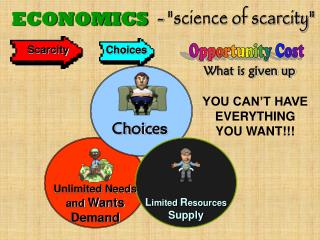
OPPORTUNITY COST THE VALUE OF WHAT IS GIVEN UP WHEN A CHOICE IS MADE.
TARRIFF A TAX ON IMPORTED AND EXPORTED GOODS
QUOTA AN EXAMPLE OF A TRADE BARRIER THAT SETS A LIMIT ON THE NUMBER OF A GOOD THAT CAN BE IMPORTED.
EMBARGO AN OFFICIAL BAN ON TRADE OR OTHER COMMERCIAL ACTIVITY WITH A PARTICULAR COUNTRY.
ENTREPRENEUR SOMEONE WHO HAS AN IDEA FOR A GOOD OR SERVICE AND TAKES THE RISKS TO PRODUCE IT.
INVEST TO COMMIT MONEY OR CAPITAL TO GAIN FINANCIAL RETURN.
CURRENCY COUNTRIES CREATE THEIR OWN CURRENCY TO USE AS MONEY
GROSS DOMESTIC PRODUCT (GDP) ECONOMISTS USE GDP NUMBERS TO DETERMINE THE STRENGTH OF COUNTRIES’ ECONOMIES AND TO COMPARE THEM.
CREDIT RECEIVING A GOOD OR SERVICE NOW AND PAYING FOR IT LATER.
INCOME MONEY COMING IN FOR A PERSON OR INTO A BUSINESS
SPENDING TO USE UP
SAVING INCOME NOT YET SPENT