
Exploring Chican@/Latin@ Identity: Gender, Sexuality, and Cultural Narratives
This overview delves into the complexities of Chican@ and Latin@ identity development, highlighting the intersecting themes of gender, sexuality, and cultural heritage. Through the lens of various scholars and narratives, including Anzaldúa’s exploration of fear and identity and Richard Rodriguez's reflections on familial acceptance of homosexuality, we examine the unique cultural frameworks that influence how identities are negotiated within these communities. The discussion incorporates influential figures like Ricky Martin and Perez Hilton, showcasing the diversity of experiences within Chican@/Latin@ culture.
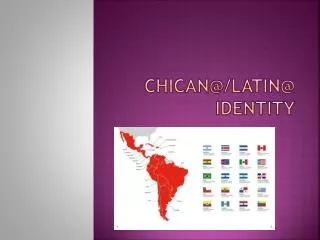

Exploring Chican@/Latin@ Identity: Gender, Sexuality, and Cultural Narratives
E N D
Presentation Transcript
LGBT Chican@s/ Latin@s
Quote • “In my own my family...it would have been impossible for them to have dealt with the words ‘gay’ or ‘homosexual’ in my relationship with them. They didn't want it said, they didn't want it named or defined, but they assumed it and accepted it. These communities have very intricate ways of dealing with these things and they are not necessarily the highly politicized tactics that you see in traditional middle-class society in America.” • Mexican American Richard Rodriguez