The Impact of German U-Boat Warfare on U.S. Entry into World War I
During World War I, German U-boats shattered the stalemate at sea by sinking Allied supply ships, significantly contributing to the U.S. decision to enter the war. Notably, the sinking of the Lusitania in 1915 killed 1,200 people, including 128 Americans. Following the Sussex Pledge, which required Germany to provide warnings before U-boat attacks, tensions escalated with the interception of the Zimmerman Note, where Germany sought an alliance with Mexico against the U.S. By April 1917, after the sinking of three American ships, the U.S. officially joined the war.

The Impact of German U-Boat Warfare on U.S. Entry into World War I
E N D
Presentation Transcript
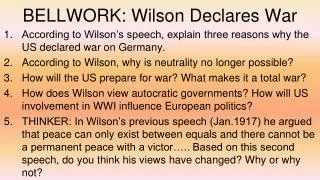
U.S Declares War Section 2
German Sub Warfare (U-boat) • German subs broke the stalemate at the sea’s • U-boats were used to sink allied supply ships • 1915 U-boat sinks the Lusitania, a passenger liner. 1,200 passengers died, including 128 Americans • Sussex Pledge – Germany was to warn before u-boat attacks
Lusitania Carried 4,200,000 rifle rounds 18 cases of explosive fuses
Zimmerman Note • Intercepted by Britain • The note was from Germany secretly asking Mexico to declare war on the U.S • If Mexico declared war on U.S. Germany promised Mexico land in the U.S
America at War • March 16, 1917 Germany sinks 3 American ships • April 6, 1917 the president signs a resolution to go to war • The resolution was supported strongly by senators and congressmen
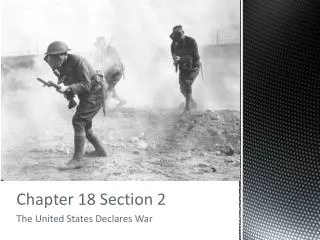
Gas Warfare Chlorine Gas Phosgene Caused less coughing than chlorine gas Onset of symptoms came within 48 hours Can cause death b/c people don’t know they are exposed • 1st used by Germans • Greenish yellow cloud • Once inhaled brought on choking attacks as gas ate respiratory organs • Mixes with mucus to produce hydrochloric acid (lethal)
Mustard Gas • Odorless chemical • Caused blisters internally and externally • Would remain in soil for weeks • If a trench was being lost armies would intentionally infect the trench