Understanding the Structure and Function of the U.S. Congress
The U.S. Congress is a bicameral legislature comprising 269 members, with 227 Representatives, 2 Delegates, and 40 Senators. A majority have backgrounds in public service or law, with significant representation from the business and education sectors. The current composition reflects a balance of power between the two parties, notably in the House and Senate. Leadership roles, the significance of incumbency, and various types of congressional committees play crucial roles in legislation. This overview explores who represents constituents, key positions, and committee functions in Congress.


Understanding the Structure and Function of the U.S. Congress
E N D
Presentation Transcript
Who they are • Occupation • 269 members (227 Representatives, two Delegates, and 40 Senators) served in state or territorial legislatures • 214 members (182 Representatives and 33 Senators) list their occupation as public service/politics • 225 (168 Representatives and 57 Senators) list law • 201 (175 Representatives and 27 Senators) list business • 94 (78 Representatives and 16 Senators) list education • Party Breakdown • Senate: Republicans – 40; Democrats – 58; Independent – 2 (vote with democrats) • House: Republicans – 178; Democrats – 257
Who Represents Westerville? • District: 12th • Representative: Pat Tiberi (R) • Opponents: • Paula Brooks (D) • Travis Irvine (Lib)
Ohio’s Senators Senator George Voinovich (R) - retiring from Senate Senator Sherrod Brown (D) - Elected in 2006 Current race Lee Fisher (D) vs. Rob Portman (R)
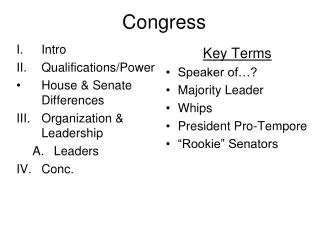
Formal Leadership Leadership in the House Leadership in the Senate The Speaker of the House The Majority Leader The Minority Leader Whips Vice President Majority Leader Minority leader Whips
Types of Congressional Committees • Standing Committees • Where all bills are referred • Select Committees • accomplish a particular task • Joint Committees • members of each chamber • Conference Committees • Settles differences between versions of bills • House Rules Committee • makes rules that will govern what happens to the bill on the floor of the House