Ev Cathode Active Material Market
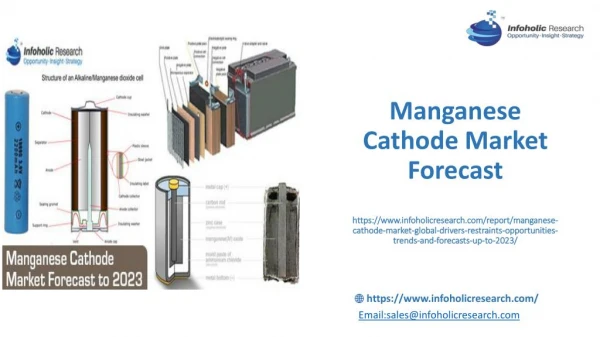
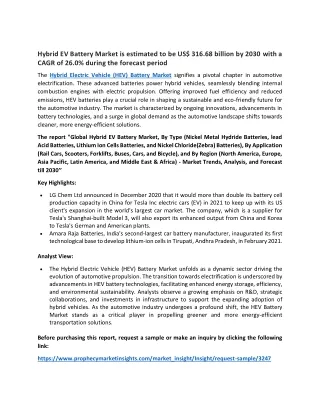
The EV Cathode Active Material (CAM) Market centers on materials used in the cathodes of lithium-ion batteries, which power electric vehicles (EVs).


Ev Cathode Active Material Market
E N D
Presentation Transcript
+1 217 636 3356 +44 20 3289 9440 sales@mobilityforesights.com Your Cart 0 Company Market Reports Consumer Research Advisory Services Exports - Imports Careers Contact Us Blog Your cart is empty Your Name Return to Shop Business Email Global EV Cathode Active Material Market 2024-2030 Country Phone Number +82 Company Name Single User License : $ 3,500 Your message Corporate User License : $ 6,000 By submitting this form, you are agreeing to the Request Sample Terms of Use and Privacy Policy. I'm not a robot reCAPTCHA Privacy - Terms BUY NOW DOWNLOAD SAMPLE DESCRIPTION TABLE OF CONTENTS EV CATHODE ACTIVE MATERIAL MARKET KEY FINDINGS The Asia Pacific region is expected to be the largest and fastest-growing market for EV cathode active materials. Nickel-rich NMC (NCM 811 and NCM 911) is expected to be the most dominant cathode active material type, followed by lithium iron phosphate (LFP). The key market drivers include the increasing demand for EVs, government initiatives to promote the adoption of EVs, and the declining cost of lithium-ion batteries. The key market challenges include the limited supply of lithium and cobalt, and the technical challenges in developing new and improved cathode active materials. EVs are becoming increasingly popular due to their environmental benefits, lower operating costs, and improved performance. The increasing demand for EVs is driving the demand for EV cathode active materials, as they are a key component of lithium-ion batteries, which are the most widely used type of battery in EVs. The cost of lithium-ion batteries has declined significantly in recent years, making them more affordable for EV manufacturers and consumers. This has further boosted the demand for EVs and EV cathode active materials. Researchers and battery manufacturers are constantly developing new and improved cathode active materials with better performance characteristics, such as higher energy density, longer cycle life, and faster charging capability. These new and improved cathode active materials are making EVs more attractive to consumers, which is further driving the growth of the market. Renewable energy sources, such as solar and wind power, are becoming increasingly popular. EVs can play a key role in integrating renewable energy into the grid, as they can store excess renewable energy and provide it back to the grid when needed. This is expected to further drive the demand for EVs and EV cathode active materials. Consumers are becoming increasingly aware of the environmental impact of transportation and are looking for more sustainable solutions. EVs are a more sustainable transportation option than traditional gasoline-powered vehicles, and this is driving the demand for EVs and EV cathode active materials. Lithium and cobalt are two key raw materials used in EV cathode active materials. The supply of these materials is limited, which could constrain the growth of the market in the future. There are a number of technical challenges in developing new and improved EV cathode active materials with better performance characteristics. For example, nickel-rich NMC cathode active materials, which offer higher energy density, are less stable and have a shorter cycle life than other cathode active materials. EV cathode active materials are expensive, which adds to the cost of EVs. This could be a barrier to adoption for some consumers. We use cookies to understand site usage and improve content and offerings on our site. To learn more, refer to our Privacy Policy. By continuing to use this site, or closing this box, 0 EV CATHODE ACTIVE MATERIAL MARKET OVERVIEW Learn more you consent to our use of cookies. The surging popularity of electric vehicles, attributed to their eco-friendly attributes, cost-efficiency, and enhanced performance, is a prime driver. EVs predominantly rely on lithium-ion batteries, wherein cathode active materials play a Got it! pivotal role. Send message Continue Shopping The significant decline in lithium-ion battery costs in recent years is making them more cost-effective for both EV manufacturers and consumers. This cost reduction is further propelling the demand for EVs and, in turn, EV cathode active materials. The market is witnessing a transition towards nickel-rich NMC cathode active materials due to their superior energy density. These materials are especially suitable for long-range EVs, driving their adoption. Ongoing research by both researchers and battery manufacturers is leading to the development of innovative cathode active materials with enhanced performance characteristics. These innovations, including higher energy density, longer cycle life, and faster charging capability, are poised to foster market growth in the coming years. Several technical challenges exist in the development of advanced EV cathode active materials with superior performance characteristics. For example, nickel-rich NMC cathode active materials, while offering higher energy density, exhibit lower stability and shorter cycle life compared to other materials. The high cost of EV cathode active materials contributes to the overall cost of EVs, potentially acting as a deterrent for some consumers considering EV adoption. EV CATHODE ACTIVE MATERIAL MARKET DEVELOPMENTS AND INNOVATIONS S Overview of Region of Development Detailing Possible Future Outcomes No Development Development General Motors has revealed plans to build a new cathode facility in North America for lithium- General ion batteries. The plant, Motors which will also be announces it developed in collaboration This would enhance better Technologies and 1 will build a new Global Scale with Posco Chemical of production cathode plant South Korea, will in North manufacture cathode America active material (CAM), which accounts for around 40% of the cost of an EV battery system. EV CATHODE ACTIVE MATERIAL MARKET SIZE AND FORECAST
The global EV cathode active material market size was valued at USD xx billion in 2023 and is projected to reach USD xx billion by 2030, growing at a CAGR of xx% during the forecast period. TRENDS IN EV CATHODE ACTIVE MATERIAL MARKET Governments around the world are offering incentives to promote the adoption of EVs, such as subsidies, tax breaks, and preferential loan rates. These incentives are making EVs more affordable and accessible to consumers, which is further driving the demand for EV cathode active materials. Other battery technologies, such as solid-state batteries, are being developed. These technologies could potentially offer better performance and lower cost than lithium-ion batteries, which could pose a challenge to the EV cathode active material market in the future. BASF, the German chemical giant, announced in August 2023 that it would invest €1 billion in EV cathode active materials. The investment will be used to expand BASF’s production capacity for nickel-rich NMC cathode active materials at its sites in Harjavalta, Finland, and Schwarzheide, Germany. CATL, the Chinese battery maker, signed a deal in July 2023 to supply EV cathode active materials to Volkswagen Group. The deal is worth over €10 billion and is the largest deal for EV cathode active materials ever signed. LG Chem, the South Korean battery maker, announced in June 2023 that it would develop new EV cathode active materials with higher energy density. The new cathode active materials are expected to be used in LG Chem’s next-generation batteries, which will have longer range and faster charging capability. SK On, the battery subsidiary of SK Group, announced in May 2023 that it would build a new EV cathode active materials plant in the United States. The plant will be located in Georgia and is expected to start production in 2025. Nickel-rich NMC cathode active materials offer higher energy density than other cathode active materials, making them ideal for long-range EVs. As a result, there is a growing demand for nickel-rich NMC cathode active materials in the market. Major players in the EV cathode active material market, as well as new entrants, are investing heavily in research and development, production capacity expansion, and new sources of lithium and cobalt. This is a positive sign for the future growth of the market. LFP cathode active materials are less expensive and more stable than NMC cathode active materials, making them a good option for low-cost EVs and energy storage applications. The demand for LFP cathode active materials is expected to increase in the coming years High-nickel NMC cathode active materials offer even higher energy density than nickel-rich NMC cathode active materials. However, they are also more expensive and less stable. Researchers and battery manufacturers are working to develop high- nickel NMC cathode active materials with better performance and lower cost. Cobalt is a key raw material used in EV cathode active materials. However, cobalt is expensive and its mining can have negative environmental and social impacts. Researchers and battery manufacturers are developing cobalt-free cathode active materials to reduce the cost and environmental impact of EV batteries. NEW PRODUCT LAUNCH IN EV CATHODE ACTIVE MATERIAL MARKET BASF, the German chemical giant, has launched a new nickel-rich NMC cathode active material for long-range EVs. The new material, called CAM801, offers a higher energy density than conventional NMC cathode active materials, making it ideal for EVs with longer ranges. CATL, the Chinese battery maker, has launched a new LFP cathode active material for low-cost EVs. The new material, called CTP LFP, is less expensive than NMC cathode active materials and offers a longer cycle life. This makes it a good option for low-cost EVs and energy storage applications. LG Chem, the South Korean battery maker, has launched a new high-nickel NMC cathode active material for high- performance EVs. The new material, called NCMA 911, offers a very high energy density, making it ideal for high-performance EVs with long ranges. SK On, the battery subsidiary of SK Group, has launched a new cobalt-free cathode active material for sustainable EVs. The new material, called LFP95, is made without cobalt, which is a key raw material used in EV cathode active materials that has a negative environmental and social impact. EV CATHODE ACTIVE MATERIAL MARKET SEGMENTATION Material type Nickel-manganese-cobalt (NMC) Lithium iron phosphate (LFP) Lithium nickel cobalt aluminum oxide (NCA) Others Battery type Lithium-ion batteries Lead-acid batteries Others (solid-state batteries, nickel-cadmium batteries, etc.) End-use Automotive Consumer electronics Industrial Others (energy storage systems, etc.) By region North America Europe China Asia Ex China ROW COMPETITIVE LANDSCAPE Manufacturing improved battery chemistries will be critical. The procedure is hard, however, since five parameters must be improved at the same time: energy density, which affects vehicle range; power, which impacts accelerating and recharging characteristics; longevity; cost of raw materials; and protection. All five of these properties are affected by the electrode materials. The modern lithium-ion cathodes are complexation materials, which means they have channels packed with lithium batteries. Samsung SDI is one of the leading developers of battery cathode active material technology in the market. It has been developing the NCA based cathode technology based on active cathode materials. Competing polymers, such as NCM and
LMO, have lower power and energy density than NCA. As a result, it is frequently utilized in power tools in the standard battery market. NCA compounds developed on Samsung SDI innovation outperform other cathode materials in terms of power and safety. With both the remarkable NCA innovation, the High-Ni cathode substances with more than 88 percent nickel to power tool cylindrical batteries, demonstrating its excellent performances and manufacturing advanced technologies. In addition, High-Ni NCA cathode compounds containing 88 percent nickel are used in the upcoming Gen.5 Battery pack. BASF Catalysts is part of the developing regime of cathode active materials for the market. The cathode active polymers product from BASF is well-suited to the changing needs of battery packs in automobile powertrains. BASF’s HED series of implementation cathode active materials (CAM) provides excellent power density, dependability, and performance for lithium- ion batteries used in electric cars. BASF holds a license agreement from Argonne National Laboratories (ANL), the global leader in Nickel Cobalt Manganese (NCM) technologies, to develop and commercialise lithium-ion battery materials. The technique has the capability of providing highly energetic volume and compactness, as well as better chemical durability, to meet the needs of automobile powertrain battery packs. ELECTRIC VEHICLE INDUSTRY – ROLE OF DIFFERENT REGIONS 1. Africa – Africa is a region rich in raw materials, and supplies the raw materials mainly for batteries in the electric vehicle industry. It is also key in supplying copper, neodymium and graphite which are crucial for the EV industry. 2. Europe – Europe is a major market for the sales of electric vehicles and a major manufacturing region for EVs and components. The region is also rich in hardware and software development talent for the electric vehicle industry thereby playing a big role in technological innovation. The region has upcoming foundries for semi-conductors and battery plants which will decrease the reliance of the region on Asia mainly China. Regulations are a major driving factor for the electric vehicle industry in this region. 3. Asia – Asia is currently the largest market for the sales of electric vehicles as well as the largest hub for the manufacturing for EVs and components, currently with a monopoly in semiconductor manufacturing. Due to high localization in this region, there is immense hardware and software talent pool and innovation present in the region. The region also has hardware manufacturing with dominance in various finished materials such as steel and aluminium which are exported to Europe and North America. 4. North America – North America is a large market for electric vehicles and a ground for technological innovation. There are various component manufacturing grounds, as well as upcoming battery plants and semiconductor manufacturing that will enable North America to improve its EV market. Efforts are underway to develop a more localized supply chain including localized manufacturing and increasing recycling. 5. Latin America and ROW – Chile and Argentina, are key suppliers of lithium, a crucial component for EV batteries. Latin America has reserves of copper and other essential materials for EVs. Currently, it is a small market for EVs but manufacturing of EVs is expected to increase in this region. COMPANY PROFILE IN EV CATHODE ACTIVE MATERIAL MARKET BASF CATL LG Chem SK On Panasonic Sinoma Graphite CNano Technology Shin-Etsu Chemical Toyo Tanso Mersen Imerys Graphite & Carbon THIS REPORT WILL ANSWER THE FOLLOWING QUESTIONS 1. What are the key factors driving the growth of the market? 2. What are the key challenges facing the market? 3. What are the major trends in the market? 4. What are the major players in the market? 5. What are the government policies and regulations supporting the market? 6. What are the investment opportunities in the market? 7. What is the future outlook for the market? 8. What are the different manufacturing processes for the Hyperspectral Remote Sensing Market? 9. What are the different performance characteristics of different types of EV Cathode Active Material Market? 10. What is the impact of the use of cobalt-free cathode active materials on the global EV cathode active material market? 11. How is the EV Cathode Active Material Market expected to evolve in the coming years? 12. What is the market size of EV Cathode Active Material Market, and how the market is expected to grow from 2023 to 2030? 13. Who are the major players in the global EV cathode active material market? 14. What are the recent new product launches in the global EV cathode active material market? 15. What are the factors that are influencing the price of EV Cathode Active Material Market? RELATED REPORTS MARKET REPORTS CONSUMER RESEARCH INFORMATION ADVISORY SERVICES CONTACT INFORMATION 172/1, 2nd Floor, 5th Main, 9th Cross Rd, Opposite to Kairalee Nikethan Education Trust, Indira Nagar 1st Stage, Bengaluru, Karnataka 560038, INDIA +1 217 636 3356, +44 20 3289 9440 sales@mobilityforesights.com Working Hours: Mon - Fri (9 AM - 9 PM IST) Connect with us © Copyright 2017-2023. Mobility Foresights. All Rights Reserved.