Enhancing Critical Thinking on Terrorism through Web Quests
This article explores the use of web quests as a dynamic educational tool to promote critical thinking about terrorism, homeland security, and emergency management. It highlights the process of creating effective web quests, including the components of Introduction, Task, Information Sources, and Guidance. Featuring templates and resources for implementation, the piece underscores the importance of incorporating visual aids and assessments, like Venn diagrams, to engage students. Web quests are presented as a transformative approach to education in the context of pressing global issues.

Enhancing Critical Thinking on Terrorism through Web Quests
E N D
Presentation Transcript
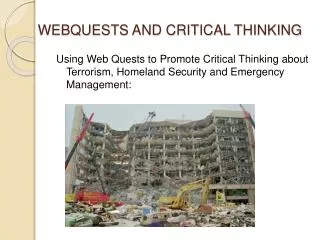
WEBQUESTS AND CRITICAL THINKING Using Web Quests to Promote Critical Thinking about Terrorism, Homeland Security and Emergency Management:
Why Web Quests? Bernie Dodge and Tom Marsh Comment on Webquest.org:
How to create a Terrorism Web Quest:First, go to a search engine: Type in words like “terrorism or “Oklahoma City Bombing”
Part of a web quest on terrorism by Annette Lamb and Larry Johnsonfrom: http://www.42explore2.com/terrorism.htm
Another web quest on terrorism by Tom March from: http://web-and-flow.com/members/tmarch/freedom2/webquest.htm
You should include a worksheet like this one from Tom March.
Another example Of a worksheet, Note check boxes instead of blanks:
Another form of assessment is to require students to create a Graph such as a Venn Diagram
Decision Tree can be another type of assignment comparing two incidents
Conclusion • Web Quests can be an excellent tool to promote critical thinking in a class on terrorism, emergency management or homeland security. • It is important to include the following processes: • Introduction • Task • Information sources • Process steps • Guidance • Conclusion