The Gilded Age Titans: Captains of Industry or Robber Barons?
Explore the contrasting narratives of industrialists during the Gilded Age, such as Carnegie, Rockefeller, and Vanderbilt. Analyze their business practices, including vertical and horizontal integration, cost control, and stock incentives for managers. Delve into the implications of trusts, advertising strategies, and the creation of company towns. Discover societal perceptions through the lens of Social Darwinism and the debate over their legacy as either heroic figures or unethical monopolists. Join the conversation on whether these titans were true innovators or exploitative barons.


The Gilded Age Titans: Captains of Industry or Robber Barons?
E N D
Presentation Transcript
CarnegieU.S. Steel • Quality control • Cost control / accounting • Stock incentives for managers • Vertical Integration: • Buying out your suppliers
J.P. MorganRRds & bought U.S. Steel • Holding Companies: • Companies that are formed only to buy up other companies
PullmanRailroad Cars • Company Town: • The company owns the land, houses, churches and schools around a factory. Have great control over workers.
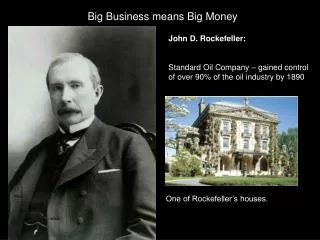
RockefellerStandard Oil • Trusts / price fixing: • Companies in the same industry ban together, drop prices, & drive out competitors. Then raise prices artificially high. • RRd. Kickbacks: • He would get rebates from RRd companies, they pass cost onto farmers
VanderbiltRailroads • Consolidation: • Made all RR tracks the same in width, then bought out all his competitors (horizontal integration).
DukeTobacco • Advertising / Label Leveraging: • Developed a label – “Bull Durham”. Advertises it / creates demand. Wouldn’t let other brands be sold if his was sold there.
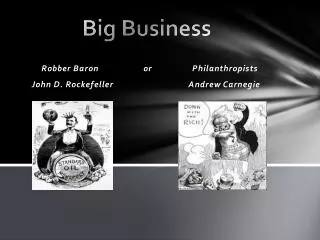
Competing Philosophies:Are these men heroic or evil? Heroic: “Captains of Industry” • Horatio Alger Stories: • “Rags to riches” tales of young men who succeed due to their own efforts / character • Social Darwinism: • These men are better and deserve their wealth. “Survival of the fittest” natural process of natural selection.
Competing Philosophies:Are these men heroic or evil? Evil: “Robber Barons” • These men use unethical practices to squash out their competition and overcharge common people. • They want the gov’t. to stop them
Homework • Would you classify the industrialists of the Gilded Age as “robber barons” or “captains of industry”? Explain your answer!