Comprehensive Guide to Parking Data Collection and Analysis Methodology
This guide serves as essential homework for effective parking data collection and analysis. It outlines the importance of studying parking lots, emphasizing the necessity of careful manual reading. Each group will manage approximately 200 parking spaces, drawing a detailed lot map and establishing a consistent data collection route monitored every 15 minutes for 2 hours. The guide provides a structured method for recording data on parking volume, turnover, duration load, and accumulation, leading to valuable insights into parking usage. Final interpretation and presentation preparations are essential steps.

Comprehensive Guide to Parking Data Collection and Analysis Methodology
E N D
Presentation Transcript
Before anything else • Read the manual carefully. It is your homework • What is covered in the following slides is only general
General • Each group to handle approximately 200 parking spaces
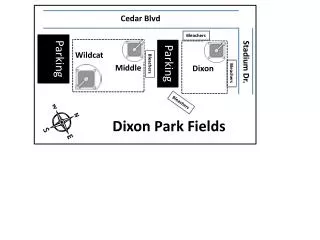
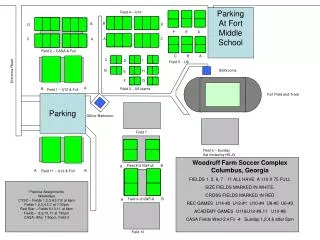
Data Collection • Draw the lot showing all spaces • Define a data collection route • Use same path every time you collect data • Each space to be monitored every 15 min for 2 hrs • Format on space recording • Vacant space: dash (-) • Parked vehicle for 1st time: Last three digits of license • Vehicle still there: check (√)
Data Summary Use 2 hrs
Parking Statistics • Parking Volume • Turnover • Duration Load • Parking Load • Accumulation
Parking Volume • # vehicles parked/1hour • 28/hr (example)
Turnover • # vehicles parked/# parking spots • 28/20 =1.4 veh./space (example)
Duration Load • Total vehicle-minutes/# of vehicles • 945/28 =33.75 min/parked vehicle
Parking Load • Total vehicle-minutes Total space-minutes available x 100 • (945/1200) x 100=79 %
Interpret and conclude • Answer questions in manual • Prepare your presentation