Nervous System
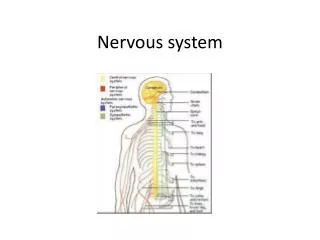
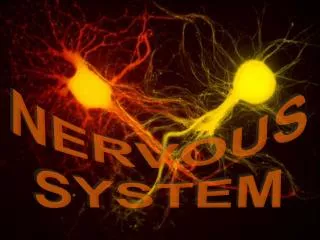
The nervous system is crucial for maintaining homeostasis by controlling various bodily systems. Neurons, the primary nerve cells, consist of dendrites that receive information, a cell body housing the nucleus and organelles, and axons that transmit signals away from the cell body. There are three types of neurons: sensory neurons that receive information, interneurons that process it, and motor neurons that trigger actions. Sensory neurons can be categorized into mechanoreceptors, thermoreceptors, pain receptors, chemoreceptors, and photoreceptors, each responding to different stimuli.

Nervous System
E N D
Presentation Transcript
1. Nervous System Maintains homeostasis by controlling all of the systems of the body.
2. Neuron = Nerve Cell Dendrite = Receives information and passes it to the cell body
Cell Body = Location of nucleus and organelles
Axon = Single portion that carries information away from cell body
3. 3 Types of Neurons Sensory Neuron – receives information.
Interneuron – processes information.
Brain and spinal cord
Motor Neuron – cause action in muscles or glands.
4. Types of Sensory Neurons Mechanoreceptors – responds to movement & pressure. (skin, touch, hear) Thermoreceptors – responds to heat loss or gain. (skin touch) Pain receptors – responds to tissue damage. (skin, touch) Chemoreceptors – nerves that respond to chemicals. (Taste, smell, nose, mouth) Photoreceptors = nerves that respond to light. (sight, eyes)