Active Solar Energy
Active solar energy utilizes solar panels to generate heat, electricity, and light for residential and commercial applications. Key benefits include pollution-free energy production, environmental conservation, and stable pricing. However, installation can be costly and carry risks like toxic chemical exposure and zoning issues. Active systems can meet 40-80% of heating needs in homes, but their efficiency in large-scale applications remains a challenge. This overview discusses the advantages, limitations, and current practices of active solar energy, as well as steps required for successful implementation.

Active Solar Energy
E N D
Presentation Transcript
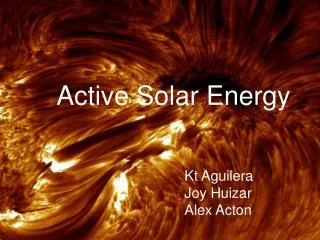
Active Solar Energy Kt Aguilera Joy Huizar Alex Acton
Active solar energy provides us with: • Heat • - when using air panels for walls, window boxes, and other collectors that heat one room and require no heat storage. • - Heats water in boilers. • Lighting • - light bulbs. • Electricity • - power your home.
Active Solar Energy Production Steps Active Solar Energy Production Steps Heating Solar energy collector Storage system Distributed boiler Distributed
Advantages of Active Solar Energy -Does not pollute or produce greenhouse gases. -Environmentally friendly. -Helps conserve the earth’s energy resources. -Stable in price. -Available everywhere on earth.
Current Energy Sources That Would Be Replaced • Oil • Coal • Natural Gas How Solar Energy is Applied Today • Heating for swimming pools, domestic hot water usage, ventilation, industrial and commercial processes • Certain energy companies
PROS No fuel No pollutants Expensive at first but long term results beneficial CONS Potential toxic chemicals as a result of photovoltaic cell production (Can be reduced by properly handling chemicals) Have to shovel off snow from solar panels Pros and Cons of Active Solar Energy
Making Active Solar Power “Mainstream” Has become more mainstream…but is still limited to certain venues -Space heater -domestic hot water -pool heater The usage of solar energy is pretty much limited to homes. -creating it on a grand scale is not cost effective to meet efficiency
Michigan Infrastructure Variations There are regulations for installation of solar panels… Some Precautions -Exceeding roof load -Unacceptable heat exchangers -Improper wiring -Unlawful tampering with potable water supplies -Potential zoning issues include these: Obstructing sideyards -Erecting unlawful protrusions on roofs -Siting the system too close to streets or lot boundaries Installation of solar panels High COST! -285 square feet $16000 -takes up little room; no edifices need to be built
CAN IT HAPPEN? • -an active system to provide 40%–80% of the home's heating needs • -cost effective for homes, but businesses may not be so compliant • -designing an active system to supply enough heat 100% of the time is not cost effective
SOURCES • www.newenergy.org • www.estu.strath.ac.uk • http://www.daviddarling.info/encyclopedia/A/AE_active_solar_energy_system.html • http://www.ncsc.ncsu.edu/information_resources/factsheets/20acspht.pdf